Since its announcement, one question has dominated Dragon Ball discussions everywhere: is Dragon Ball Daima canon? The confusion is understandable. Daima looks different, feels different, and seems to play with ideas Dragon Ball fans haven’t seen explored in years. But beneath the visual changes and mysterious tone lies a clear truth—Dragon Ball Daima is canon, and its existence tells us a lot about where the franchise is heading.
The biggest reason Dragon Ball Daima is considered canon is its direct connection to Akira Toriyama. Toriyama was deeply involved in Daima’s concept, story, and character designs, which immediately places it within official Dragon Ball continuity. In Dragon Ball terms, Toriyama’s involvement is the strongest possible seal of legitimacy. If he builds it, it belongs. Unlike fan theories, spin-offs, or older side projects, Daima is not an experiment outside the timeline—it’s a deliberate addition to it.
What makes Daima feel confusing is that it doesn’t behave like a typical sequel. Instead of escalating power endlessly, it steps sideways, exploring identity, form, and origin. That creative choice has led some fans to mistake different for non-canon. But Dragon Ball has always reinvented itself when it needed to. Daima isn’t breaking canon—it’s expanding how canon works.
What Makes Dragon Ball Daima Officially Canon
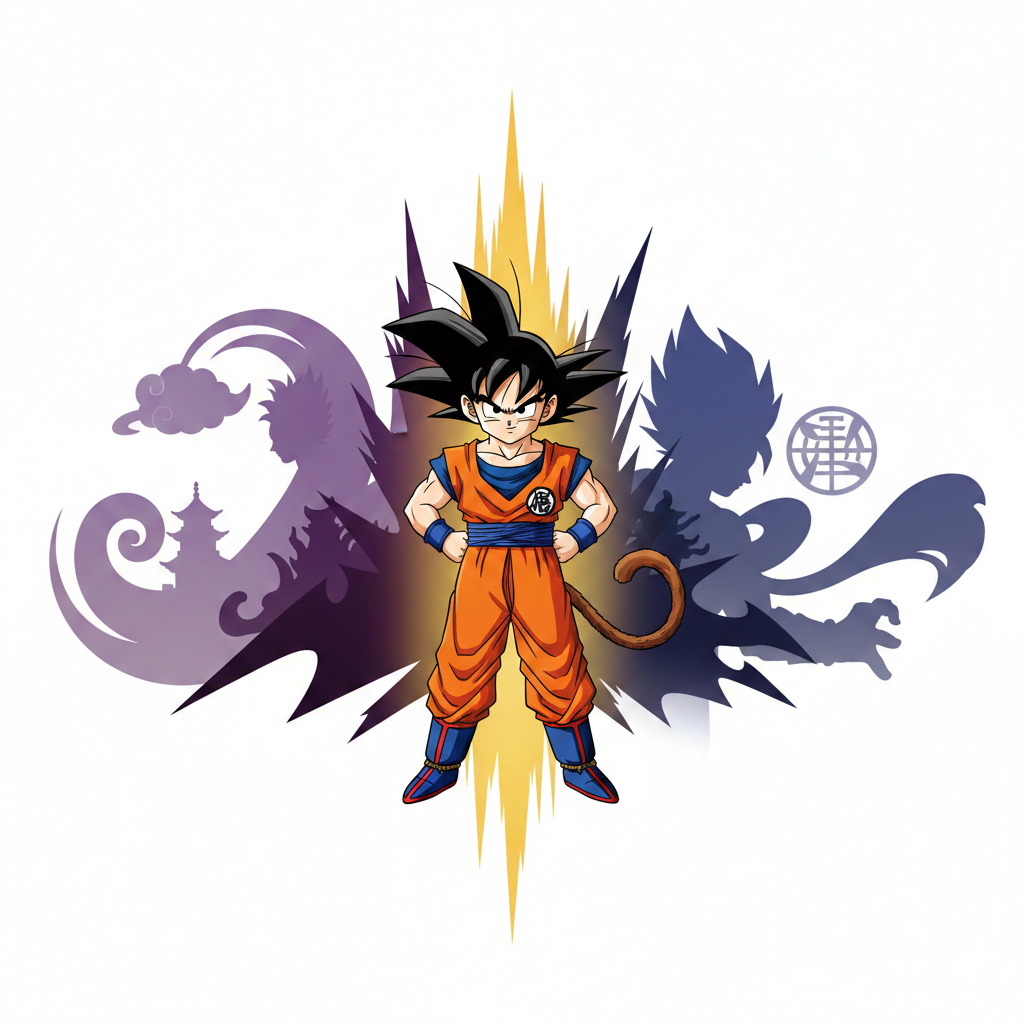
Canon in Dragon Ball has always followed a simple rule: Toriyama’s vision defines the timeline. Dragon Ball Daima passes that test completely. It’s not a remake, not a reboot, and not a “what if” scenario. It’s an official story set within the Dragon Ball universe, created to explore themes that didn’t fit neatly into ongoing arcs of Dragon Ball Super.
Unlike Dragon Ball GT, which was produced without a corresponding manga and only limited oversight from Toriyama, Daima was developed from the ground up with his direct input. That single difference changes everything. GT exists as a separate continuity. Daima does not. It exists inside the official Dragon Ball framework, even if its tone and approach feel unfamiliar.
Another key detail is that Daima doesn’t overwrite existing canon. It doesn’t erase Dragon Ball Super, the manga arcs, or recent films. Instead, it runs parallel, focusing on a different angle of the same universe. Dragon Ball has always allowed multiple layers of storytelling to coexist. Daima simply occupies a new lane within the same road.
Why Dragon Ball Daima Feels Different (But Still Fits Canon)
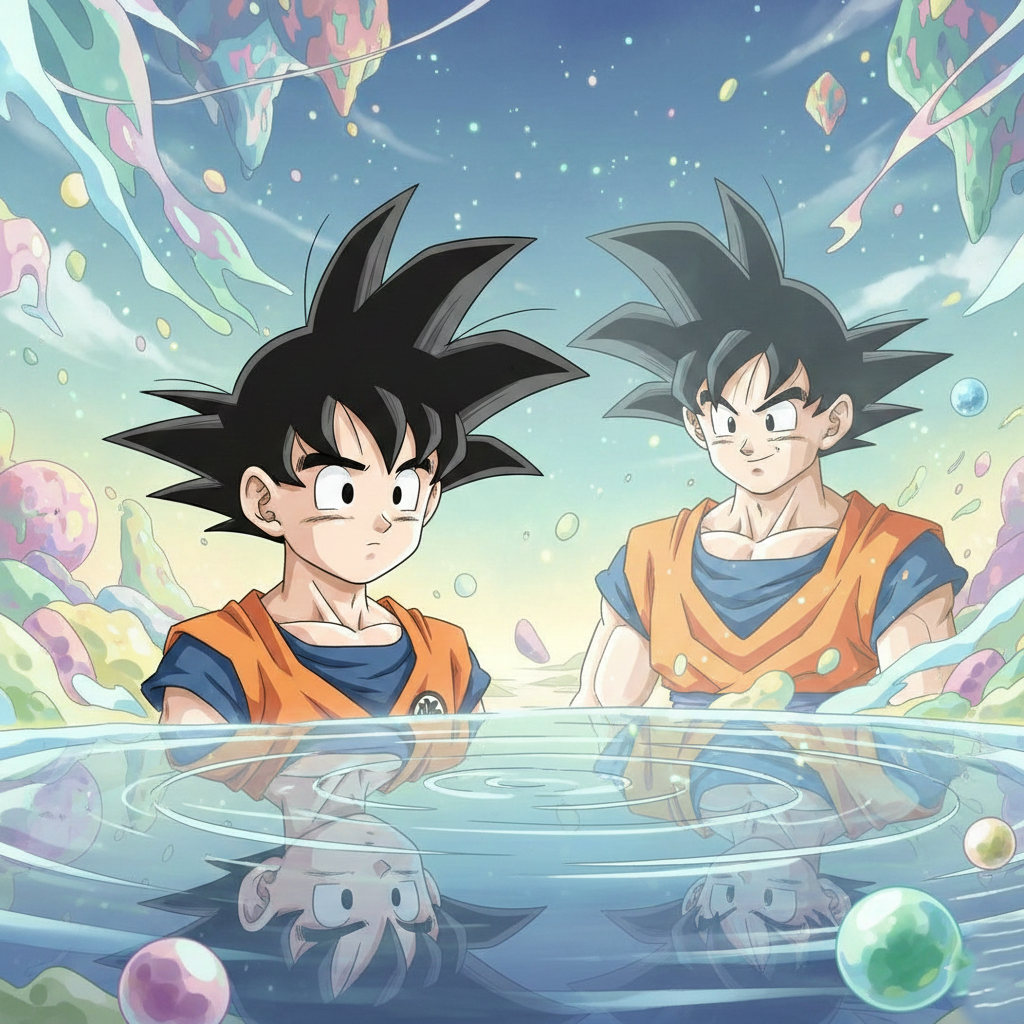
One reason fans question Daima’s canon status is its emphasis on form and scale rather than raw power. Dragon Ball Super leaned heavily into gods, multiverses, and divine energy. Daima shifts the focus inward—toward physical form, identity, and the roots of Dragon Ball itself. This tonal shift is intentional, not accidental.
Dragon Ball Daima feels closer to early Dragon Ball than late Dragon Ball Super, and that’s exactly why it works. Canon doesn’t mean repetition. It means continuity with purpose. Daima revisits the franchise’s foundation while still respecting everything that came before. This is why it can feel nostalgic and fresh at the same time.
Importantly, Daima also avoids contradictions. Nothing it introduces directly conflicts with established lore. Instead, it reframes ideas fans already understand. That careful balance is another sign of canon storytelling. Non-canon stories often ignore consequences. Daima leans into them.
How Dragon Ball Daima Connects to Dragon Ball Super
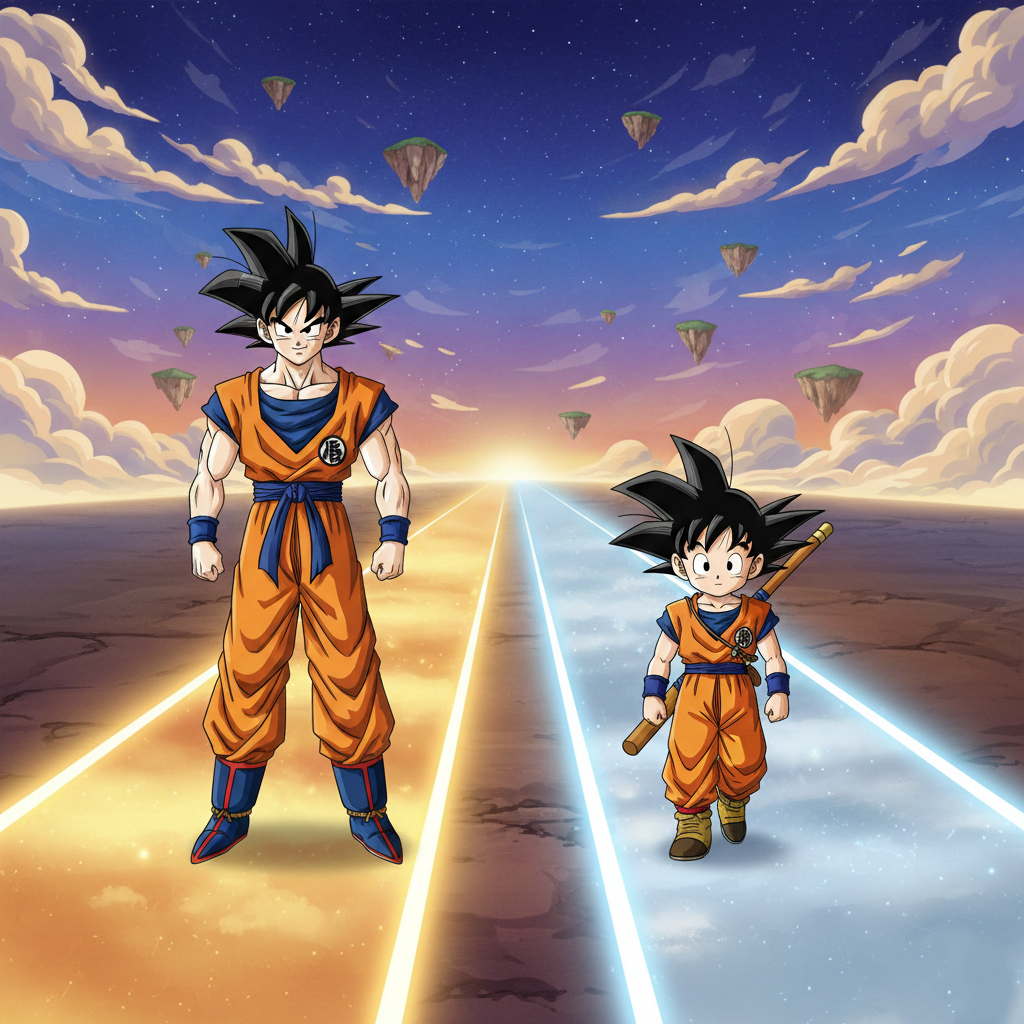
A major misconception is that Dragon Ball Daima replaces Dragon Ball Super. It doesn’t. Dragon Ball Super is still canon, and its manga continues the main power progression of the series. Daima exists alongside it, not above or below it. Think of Super as expansion and Daima as reflection.
This dual approach actually strengthens canon rather than weakening it. Dragon Ball Super answers questions about how far power can go. Dragon Ball Daima asks what power means. Both questions belong in the same universe. By separating them into different projects, Dragon Ball avoids exhausting one idea while still moving forward.
From a timeline perspective, Daima doesn’t close any doors. If anything, it opens more. Its existence suggests that Dragon Ball’s future won’t be limited to one format or one type of story. Canon is no longer a straight line—it’s a connected web.
So, Is Dragon Ball Daima Canon? The Final Answer
Yes—Dragon Ball Daima is canon.
It is officially part of the Dragon Ball universe, created with Akira Toriyama’s direct involvement, and designed to complement—not contradict—Dragon Ball Super and the broader timeline. The confusion comes from its creativity, not its legitimacy. Daima proves that c
That is the short answer — but “canon” deserves more than a yes or no. Below is the full case for Dragon Ball Daima‘s place in official continuity: exactly what Akira Toriyama did on the project, where Daima sits on the timeline next to Dragon Ball Super, why the Dragon Ball GT comparison collapses under scrutiny, the most common fan objections answered one by one, and what Daima being canon means for the franchise’s future. We close with a quick FAQ covering the questions fans ask most.
Akira Toriyama’s Exact Role in Dragon Ball Daima
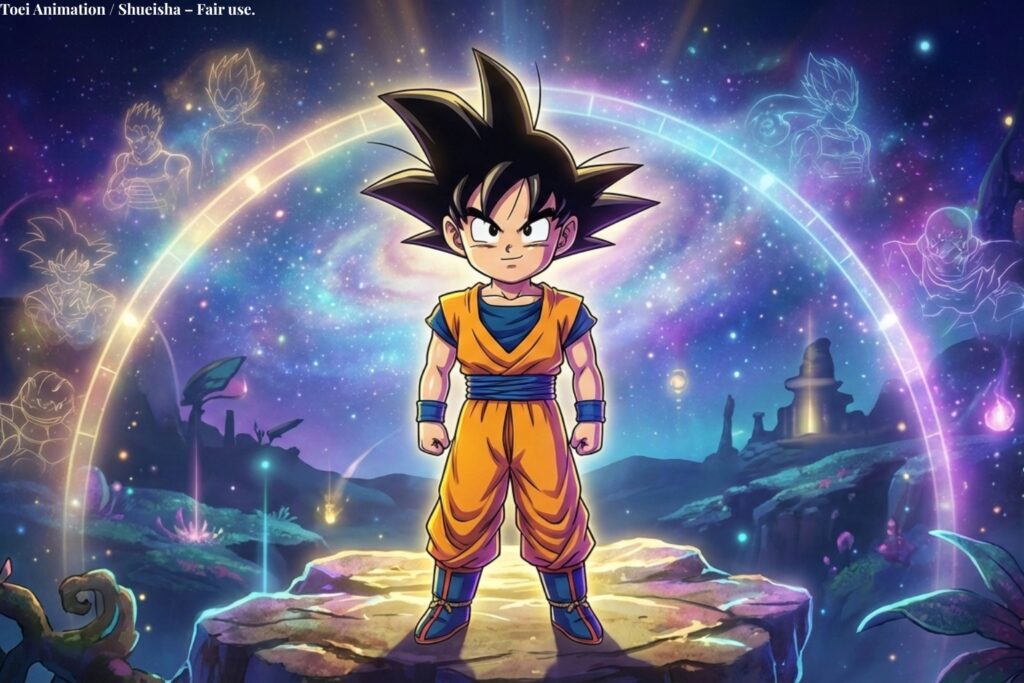
When Dragon Ball Daima was announced at New York Comic Con in October 2023 as part of the franchise’s 40th anniversary celebration, the announcement carried a personal message from Akira Toriyama: he was deeply involved in the project — more involved, he suggested, than he usually was with anime productions. That was not marketing fluff. Toriyama is credited with Daima’s original story concept and its character designs. He devised the story the series tells and designed its new cast himself, from the Demon Realm’s scheming new leadership to the refreshed looks of Goku, Vegeta, and the rest of the crew.
This matters because of how Dragon Ball canon actually works in practice. There is no official canon council at Toei Animation or Shueisha handing down rulings. The working rule the entire fandom and industry use is simpler: canon means the stories that come from Toriyama. Dragon Ball Super‘s anime and manga both build on story outlines he wrote. The modern films — Battle of Gods, Resurrection ‘F’, Broly, and Super Hero — all began as his scripts and designs. Daima belongs in exactly that category: a Toriyama story told with Toriyama designs. That is the beginning and the end of the canon debate.
It also makes Daima historically significant. Toriyama passed away on March 1, 2024, before the series premiered in October 2024 — making Daima one of the last Dragon Ball projects he personally shaped, completed from his finished blueprint. Treating it as non-canon would mean exiling the final story the franchise’s creator ever told from the continuity he built. Nobody who understands how this series works should be comfortable with that.
Where Dragon Ball Daima Fits on the Official Timeline
Timeline placement is the second pillar of Daima’s canon case. The series is set in the quiet years between the end of the Buu Saga and the events of Battle of Gods — before Beerus ever woke up. The inciting incident, a wish on Earth’s Dragon Balls by the Demon Realm’s new rulers, King Gomah and his brother Degesu, that turns Goku, Vegeta, Bulma, and Piccolo into children, happens entirely inside that window.
That placement answers nearly every apparent “contradiction” on its own. Why does nobody mention Beerus or Whis? They have not met them yet. Why are there no God forms or Ultra Instinct? Those transformations do not exist yet in-universe. Daima deliberately rewinds to an era when Goku’s ceiling was Super Saiyan 3, then sends its de-aged heroes on a self-contained adventure through the Demon Realm — a corner of the cosmology Super never explored. And when the adventure ends, the status quo is restored: the wish is undone, the heroes return to normal, and nothing stops Battle of Gods from unfolding exactly as we know it.
So Daima does not compete with Super — it precedes it. Every Super arc, from the Universe 6 tournament and the Goku Black saga through the Tournament of Power, Broly, Moro, Granolah, and Super Hero, still happens afterward, in order. Think of it this way: Super‘s manga is the franchise’s forward march, and Daima is a lost chapter from just before that march began. As for where the march goes next, our Dragon Ball Super Season 2 release date guide tracks everything known about the anime’s return.
Dragon Ball Daima vs. Dragon Ball GT: Why the Canon Comparison Fails
The GT comparison is the most common — and weakest — argument against Daima’s canon status. Yes, both series turn Goku into a kid. The similarities end there. Dragon Ball GT (1996-1997) was a Toei Animation original produced after the manga had ended, with no Toriyama-written story behind it. Toriyama’s contribution was limited to the “GT” title itself and some early design input; the plotting, worldbuilding, and continuity calls were Toei’s. GT had no manga counterpart, contradicted material Toriyama later created, and Super simply ignores it. That is why GT sits in its own separate continuity.
Daima is the mirror image of all that: a Toriyama-conceived story with Toriyama designs, announced as an official anniversary project, and carefully placed so it contradicts nothing. GT asked fans to accept a Toei-only sequel as the future of the timeline; Daima asks fans to accept a Toriyama story as a lost chapter of its past. Only one of those was ever going to be canon.
Ironically, Daima even redeems GT’s most famous idea. The primal new transformation Goku unlocks in Daima’s climax is a Toriyama-era reimagining of the form GT popularized — the same feral appeal, now inside official continuity. We have broken down exactly how that works in our guide to whether Super Saiyan 4 is canon in Dragon Ball Daima.
The Biggest Fan Confusions About Daima’s Canon Status — Answered
Most “Daima isn’t canon” arguments boil down to a handful of recurring misunderstandings. Here they are, answered one by one.
“It looks like a kids’ show, so it can’t be canon.”
Canon was never an art style. Toriyama’s own artwork grew rounder and more playful across the decades, and he personally designed Daima’s look — including its de-aged heroes. Judging canonicity by tone would also disqualify huge stretches of the original Dragon Ball, which was a gag-heavy adventure comedy long before it became a battle epic.
“Goku turning into a kid is just GT again.”
The mechanism and the meaning are completely different. GT’s de-aging was an accident caused by Emperor Pilaf’s bungled wish — a gimmick to launch a space road trip. Daima’s is a calculated strike: the Demon Realm’s new rulers deliberately wish Earth’s defenders into children to neutralize them before invading. One is a mishap; the other is the entire plot engine. Sharing a premise device is not sharing continuity.
“If it were canon, Super would mention the Demon Realm.”
Super is set after Daima and simply never needed to. Stories are not required to mention every past adventure to share continuity — the original series never referenced the movies, and nobody declared the movies non-canon on that basis. Absence of a mention is not a contradiction; it is just an untold story finally being told.
“Toriyama died before it aired, so it’s not really his.”
He completed the story concept and the character designs before production began, and the series was built directly from that finished blueprint — which is precisely why he holds the original-work credit. An author’s final work does not stop being theirs because other artists animated it after his passing.
“It ignores everything Super established.”
It predates Super. You cannot ignore what has not happened yet. Every “missing” element fans point to — Beerus, God ki, Ultra Instinct, the multiverse — is explained by the timeline placement, not by alternate continuity. Daima’s restraint is actually proof of canon discipline: a non-canon cash-in would have stuffed in fan-service transformations regardless of logic.
What Daima Being Canon Means for Dragon Ball’s Future
Daima’s canon status quietly rewrites the franchise’s playbook. For years, “canon Dragon Ball” effectively meant one thing: the Super-era escalation of gods, angels, and multiverse tournaments. Daima proves the official timeline has room for other kinds of stories — lore expeditions into unexplored corners like the Demon Realm, the origins of the Namekians, and the deeper history of the Dragon Balls themselves. Canon is no longer only about going further; it can also go deeper.
That matters enormously right now. With Toriyama gone, the franchise’s custodians need a model for new stories that honors his legacy — and Daima is the template: build from his notes, his designs, and his sense of adventure instead of only raising power levels. Whether the next step is a second season (we are tracking every update on our Dragon Ball Daima Season 2 page), a film, or plot threads picked up by the Super manga, Daima established that canon can grow sideways as well as upward.
Expect the Demon Realm’s lore to matter again, too. Daima introduced too much cosmology — the realm’s kings, its ancient ties to the Namekians, new Dragon Ball history — for future storytellers to leave sitting on the shelf. The next decade of Dragon Ball will likely be built, at least in part, on foundations Daima poured.
Dragon Ball Daima Canon FAQ
Do I need to watch Daima to understand Dragon Ball Super?
No. Daima is self-contained and set before Super begins, so you can follow the gods-and-tournaments saga without it. But Daima meaningfully enriches the lore — especially Namekian history and the origins of the Dragon Balls — in ways that make the wider universe feel bigger when you do watch it.
Does Daima contradict the Dragon Ball Super manga?
No. The two never overlap: Daima occupies the pre-Super gap and its ending restores the status quo, while the manga’s arcs — Moro, Granolah, and Super Hero — all take place later. Nothing in Daima prevents any of them from happening exactly as written.
Is Daima connected to the Dragon Ball movies?
It shares continuity with them but does not depend on them. Timeline-wise Daima sits before Battle of Gods, so the natural viewing order is Daima first, then the Super-era films and series. No movie plot points are spoiled or required viewing.
Is Super Saiyan 4 canon now?
Effectively, a version of it is. Daima gives Goku a new primal transformation heavily inspired by Super Saiyan 4 — and because Daima itself is canon, this version of the form counts in a way GT’s never did. The full breakdown is in our guide to whether Super Saiyan 4 is canon in Dragon Ball Daima.
Will there be a Dragon Ball Daima Season 2 — and would it be canon too?
A second season has not been officially confirmed, but the first season’s strong reception and the lore it left unexplored keep the door open. Any direct continuation built on Toriyama’s story would carry the same canon standing as season one. We are tracking every rumor and announcement on our Dragon Ball Daima Season 2 page.
I’m a new fan — should I start with Daima or Super?
Start with Daima if you want a compact, adventure-driven entry point: 20 episodes, one complete story, no homework required. Start with Super if you want the ongoing main saga with its escalating stakes. Either way, you are watching canon — and Daima’s timeline placement means it works perfectly as a prequel to Super.
anon Dragon Ball doesn’t have to look the same to belong to the same story.In many ways, Dragon Ball Daima represents the franchise growing up alongside its audience. It’s confident enough to slow down, look inward, and explore ideas beyond pure escalation. Canon isn’t just about what happens next—it’s about why it matters. And Dragon Ball Daima clearly matters.
If Dragon Ball Super is about evolution, Dragon Ball Daima is about identity. Together, they define the future of canon Dragon Ball.