
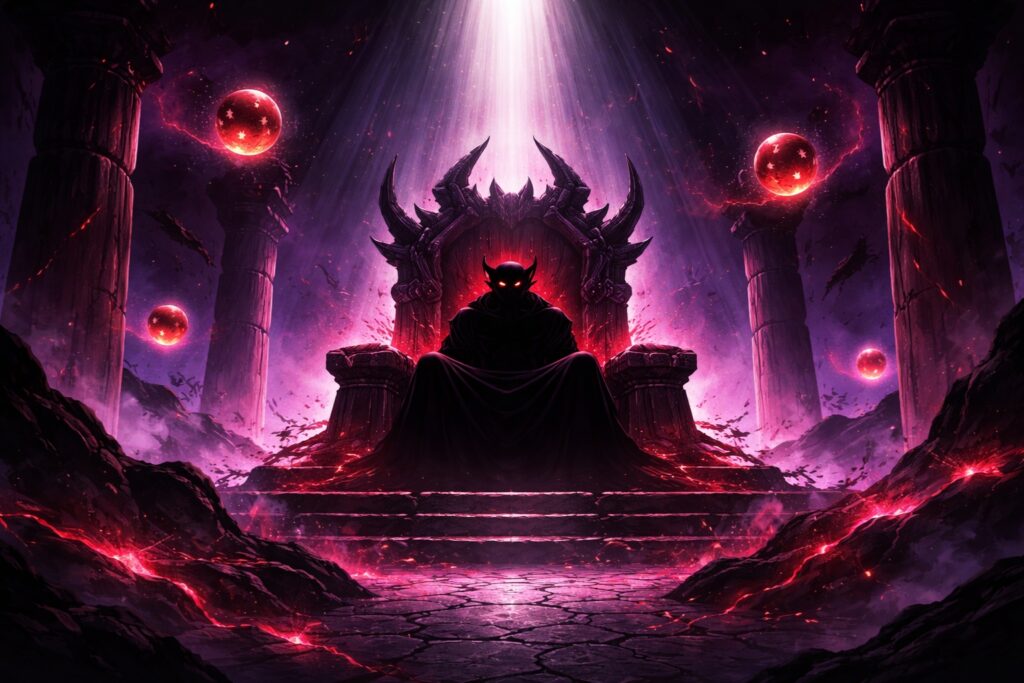
For most of Dragon Ball’s history, the Demon Realm existed at the edge of the story — referenced, feared, but rarely examined. It functioned as a narrative shadow, a place that produced dangerous figures without ever revealing how it sustained them. Dragon Ball Daima changes that perception. By bringing the realm into clearer focus, it quietly suggests something far more compelling than a simple land of monsters.
The Demon Realm is not chaos. It is organized power. Understanding that distinction transforms how we interpret its rulers, its Dragon Balls, and even its connection to past figures like Dabura. Beneath the dark aesthetic lies something far more structured: a political system built on hierarchy, resource control, and strategic authority.
A Realm Defined by Structure, Not Madness
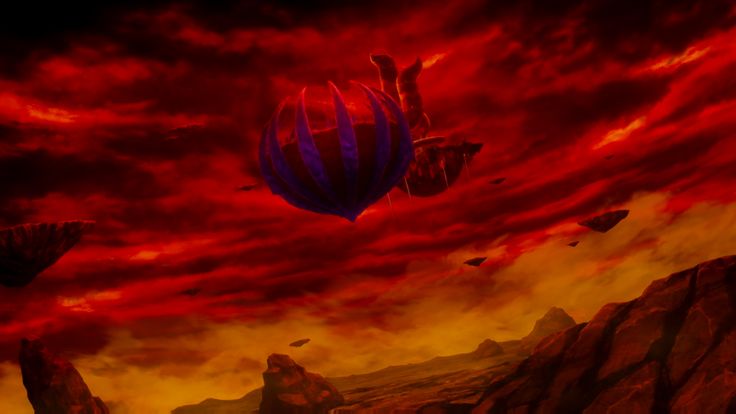
It’s easy to assume that demons would govern through disorder. After all, Dragon Ball often associates darkness with destruction. Yet when you look closely at how the Demon Realm operates, the signs of organization are unmistakable.
There are titles. There are guardians. There are systems regulating access to powerful artifacts. None of that exists in a society driven purely by impulse. Even villainous civilizations require order to survive.
The Demon Realm presents itself as a functioning political environment — one that may rely on intimidation and magical force, but still depends on layered authority to maintain stability. It is less a wasteland of monsters and more a sovereign domain operating under its own internal rules.
The Power Hierarchy: More Than Just the Strongest Fighter
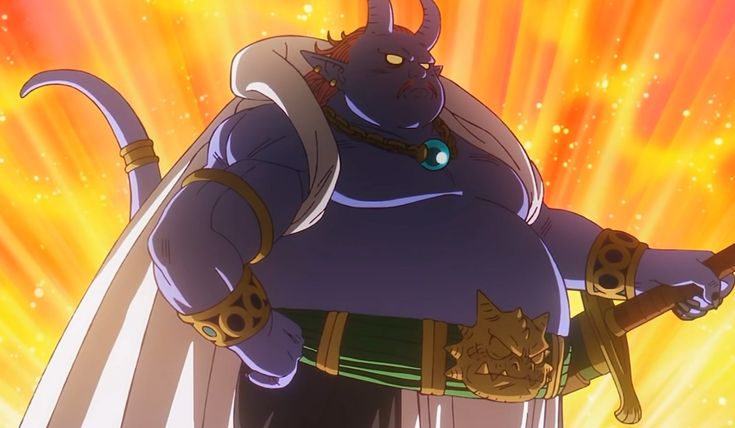
At the top of the Demon Realm’s structure stands its ruler — historically figures like Dabura. His title as king was never treated as symbolic. It implied recognition, sovereignty, and institutional backing.
Dabura did not behave like a wandering tyrant. He commanded with legitimacy. That legitimacy matters because it suggests that his authority was acknowledged within the realm itself, not merely imposed through strength.
Beneath the throne, the structure likely expands into layers of influence. Political systems require intermediaries — advisors, enforcers, or faction leaders who manage territories and execute policy. In Daima, the presence of high-ranking demonic figures with specific responsibilities hints at this deeper administrative network.
Strength remains important, but it is not the only currency. Strategic positioning, magical specialization, and loyalty networks likely determine influence just as much as combat ability. In that sense, the Demon Realm resembles a feudal monarchy more than a battlefield hierarchy.
Dragon Balls as Political Instruments

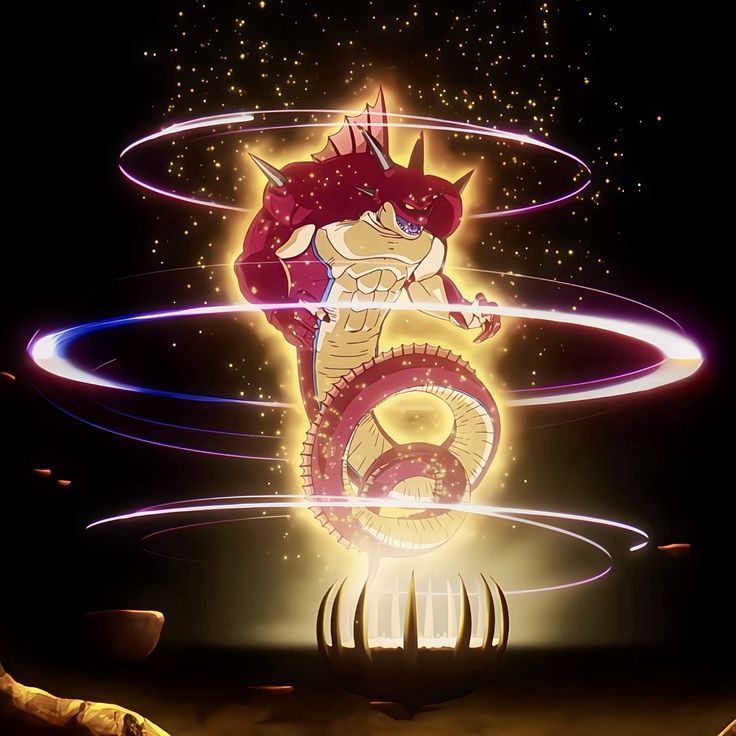
Perhaps the clearest evidence of governance within the Demon Realm is the existence of its own Dragon Balls.
Wish-granting artifacts are inherently destabilizing. Any society that allows unrestricted access to them would quickly implode. The fact that the Demon Realm continues to function implies that these objects are tightly regulated.
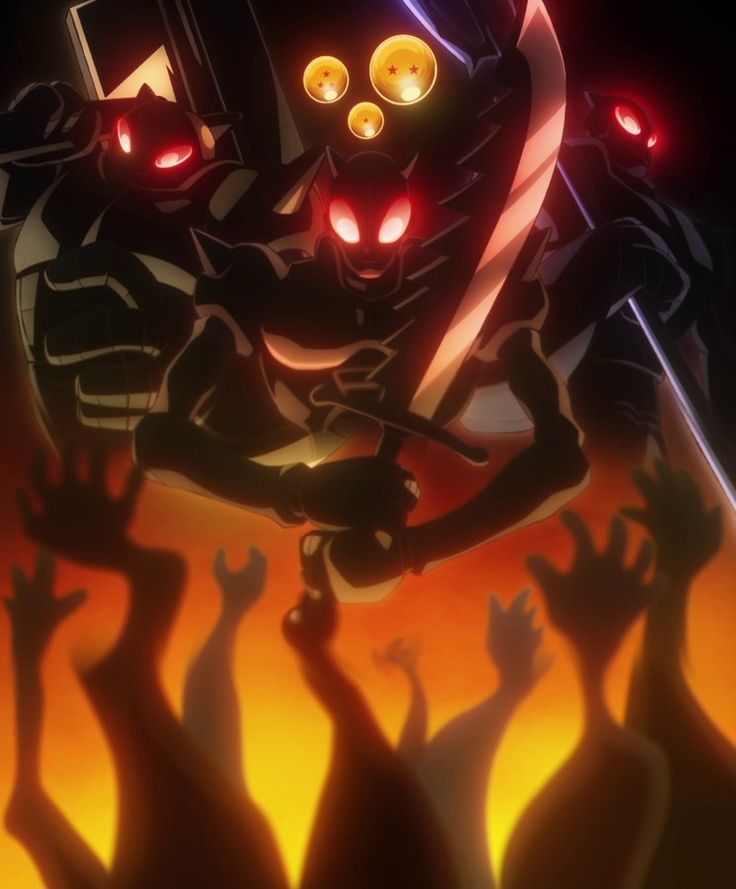
Unlike Earth’s Dragon Balls, which are tied to a guardian system rooted in spiritual balance, the Demon Realm’s Dragon Balls feel integrated into a more competitive structure. Access appears restricted, possibly overseen by guardians or protected through trials that filter who may use them.
This transforms the Dragon Balls into more than mystical relics. They become instruments of state power.
Control over them likely equates to political leverage. A ruler who governs the conditions under which wishes may be made holds ultimate authority. In that framework, the Dragon Balls are not shortcuts to victory but tools embedded within the realm’s governance system — symbols of legitimacy as much as power.
Governance Through Fear — and Strategy
It would be simplistic to describe the Demon Realm as purely authoritarian, yet fear undeniably plays a role. Authority in such an environment must project dominance. However, fear alone does not sustain rule for generations.
Dabura’s historical conduct reveals something more calculated. He was ruthless, yet he demonstrated restraint when dealing with powerful outsiders. That suggests a ruler capable of long-term thinking rather than impulsive aggression.
This nuance points to a governance model built on controlled intimidation combined with strategic diplomacy. The Demon Realm likely functions under a system where rebellion is suppressed early, but alliances and power-sharing arrangements exist among elite factions.
Rather than a single warlord dominating a lawless territory, it appears closer to a competitive aristocracy under a central monarch — a network of influential figures balancing ambition with survival.
Echoes of Dabura’s Era
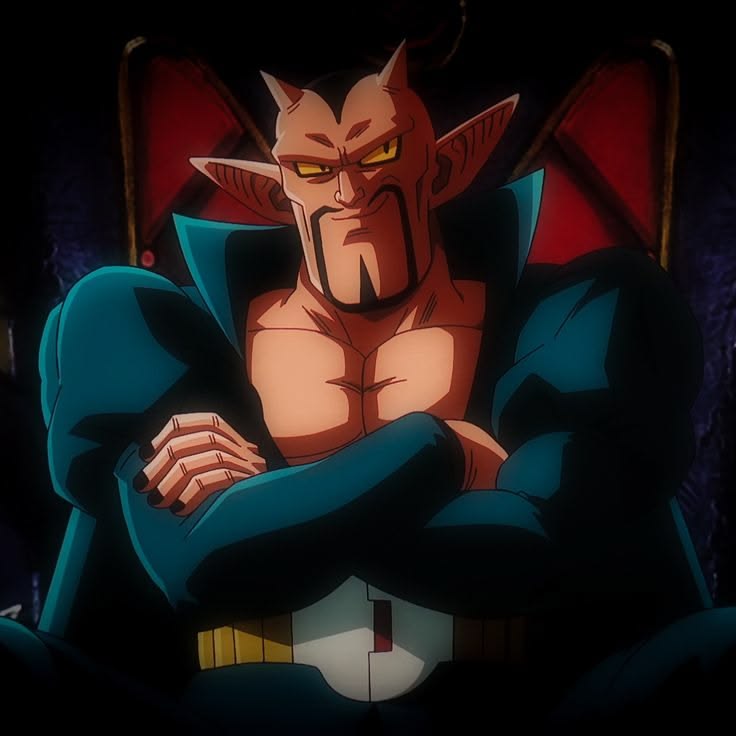
Dabura’s reign offers the strongest historical anchor for understanding the realm’s political depth. His title carried weight beyond raw strength. It implied succession, territory, and continuity.
If the Demon Realm had collapsed after his defeat, it would suggest a personality-driven system. Yet the realm persists, indicating institutional resilience. Political structures survived beyond a single ruler.
That continuity is significant. It suggests established norms perhaps rituals of succession, codified authority, or recognized lines of command. The Demon Realm is not reinvented with every king; it evolves.
In that light, Daima does not introduce chaos but expands upon a long-standing framework. The current political climate of the realm likely reflects centuries of layered governance, shaped by past rulers who refined its systems.
Comparison to Divine and Mortal Systems
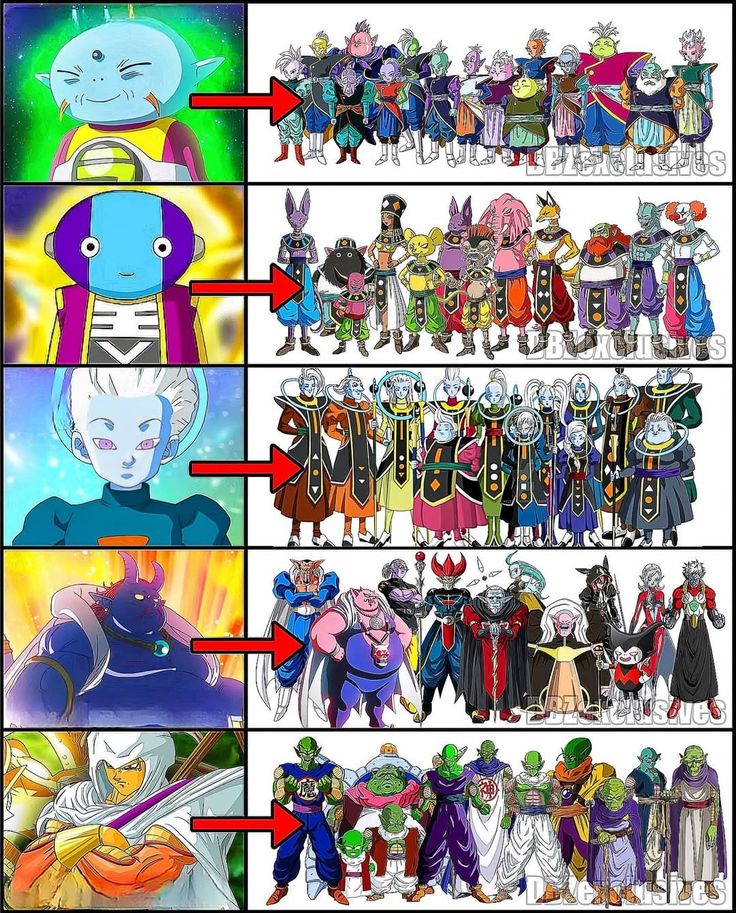
Dragon Ball broader universe is structured around hierarchies. The Kais maintain cosmic balance. Gods of Destruction operate under angelic oversight. Even mortal empires like Frieza’s rely on military bureaucracy.
The Demon Realm stands apart because it blends elements of both divine mysticism and mortal pragmatism. It is not bound by the neutrality that governs angels, nor is it as openly expansionist as galactic empires.
Instead, it occupies a middle space — adaptable, internally competitive, and politically flexible. That flexibility makes it uniquely dangerous. Where divine hierarchies follow strict codes, demons can reinterpret rules. Where mortals rely on armies, demons can manipulate magical systems. This hybrid governance style gives the realm narrative potential far beyond a simple villain origin point.
The Broader Implications for the Story
If the Demon Realm truly functions as a structured political entity, future conflicts may hinge less on brute force and more on institutional control.
Power transitions could occur through manipulation of Dragon Ball access. Factions might compete for influence rather than direct confrontation. Rulers could consolidate authority through strategic alliances rather than open warfare.
Such dynamics elevate the realm from background lore to central stage. It introduces the possibility of ideological clashes — debates over governance models, legitimacy, and control — rather than repetitive escalation of power levels. That shift would mark a significant evolution in Dragon Ball’s storytelling approach.
A Realm Built on Controlled Darkness
The Demon Realm’s greatest strength may not be its warriors, but its systems.
It maintains hierarchy without divine oversight. It regulates artifacts capable of reshaping reality. It sustains continuity across generations of rulers. These are not the traits of chaos; they are the hallmarks of governance.
Dragon Ball Daima subtly reframes the realm as something far more complex than a source of antagonists. It is a civilization operating under its own political logic — one that balances fear, ambition, and institutional control.
Understanding that structure reveals why the Demon Realm feels different from past threats. It is not a singular villain to defeat. It is a system to navigate. And in a universe increasingly defined by cosmic order, a realm governed by strategic darkness may prove to be the most unpredictable force of all.

