
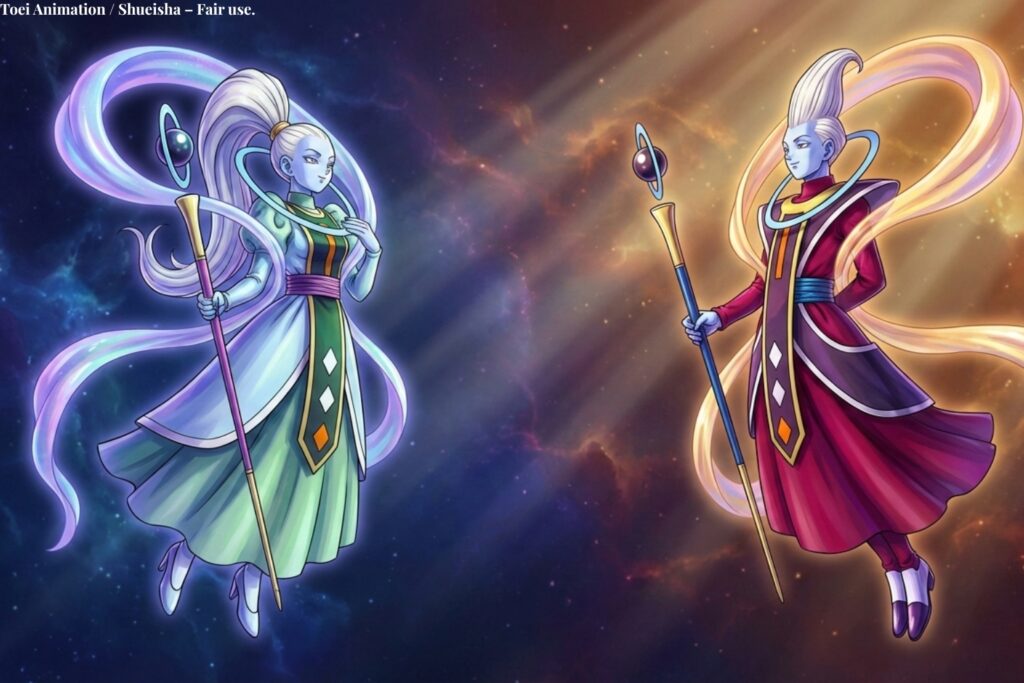
Power has always been the heart of Dragon Ball. Every saga introduces warriors who break limits, transformations that redefine strength, and cosmic beings who exist far beyond mortal imagination. Yet even in a universe filled with Gods of Destruction and reality-shaking fighters, one group remains quietly untouchable — the Angels.
Whenever an Angel appears, the atmosphere changes immediately. Gods become more cautious, battles pause, and even the most fearless fighters recognize that they are standing before beings who operate on an entirely different level of existence. Among these celestial figures, two names consistently spark debate among fans: Whis and Vados.
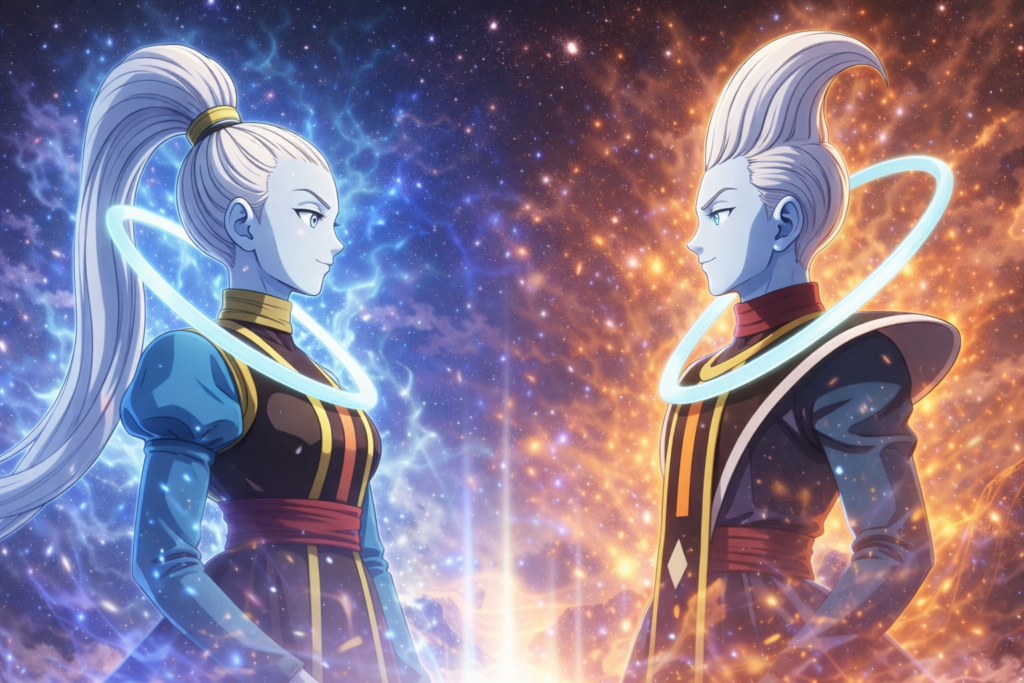
Both serve as attendants to their respective Gods of Destruction. Both possess abilities that mortals cannot comprehend. And both carry themselves with the calm confidence of beings who have never truly been challenged.
This naturally leads to one of the most fascinating power-scaling questions in Dragon Ball:
Is Vados stronger than Whis?
The answer is not as simple as fans might hope. Dragon Ball rarely reveals the full limits of its highest-tier characters, and the Angels are perhaps the greatest example of this deliberate mystery. Still, by examining the hierarchy they belong to, the statements made throughout the series, and the subtle clues hidden in their behavior, we can get surprisingly close to the truth.
Understanding Where Angels Stand in the Cosmic Order
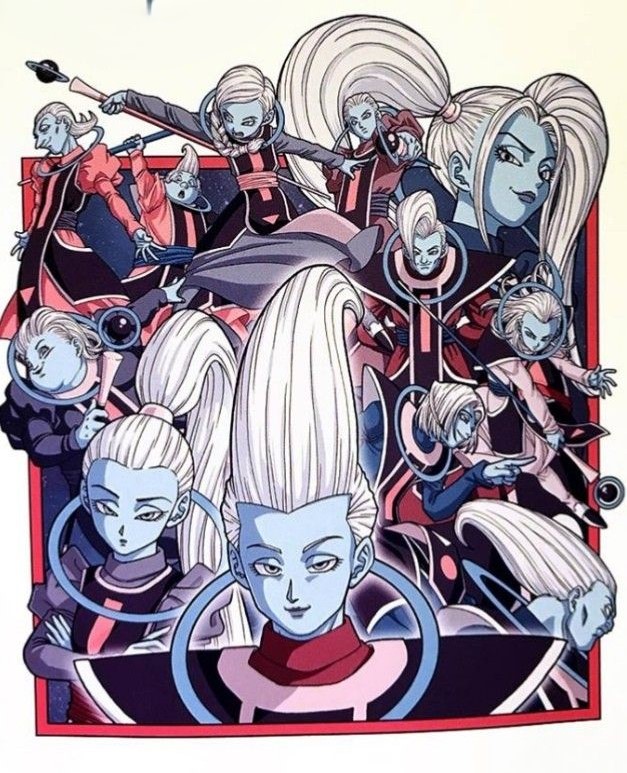
To compare Vados and Whis properly, we must first understand what Angels actually are. Unlike Saiyans, who grow stronger through battle, or gods who carry the burden of destruction, Angels represent a state of completed power. They are not climbing toward greatness — they already exist there.
Each Angel is assigned to guide a God of Destruction, ensuring that universal balance is preserved. This relationship alone tells us something important: Angels must be stronger than the gods they supervise. Without that advantage, they could not restrain or correct them when necessary.
What makes Angels even more unique is their neutrality. They do not interfere in mortal conflicts unless cosmic laws demand it. They observe, guide, and maintain order, but they do not seek dominance. Strength, for them, is not something to prove — it is simply part of their nature.
Within this structure, Whis mentors Beerus, while Vados oversees Champa. Both gods are feared across their universes, yet in the presence of their Angels, their authority clearly has limits. This alone places Whis and Vados in a realm far beyond conventional comparison.
The Line That Sparked Years of Debate
Much of the speculation about Vados being stronger comes from a brief but unforgettable exchange early in Dragon Ball Super. Vados casually remarks that she might be more powerful than Whis and even suggests she was superior at one point in the past.
What makes this moment so intriguing is its tone. It is not delivered as a dramatic revelation or a boast meant to intimidate. Instead, it feels almost conversational — the kind of comment someone makes when recalling an old rivalry with a sibling.
Whis does not react with shock or strong denial. Rather, he calmly implies that her information may be outdated, hinting that he has trained extensively since then.
That single interaction created one of the longest-running debates in modern Dragon Ball fandom. Was Vados stating a fact? Was she teasing her brother? Or was the series quietly planting the idea that Angel strength is more dynamic than we assume? Because the show never clarifies the statement, the mystery continues to fuel discussion years later.
Personality as a Reflection of Power
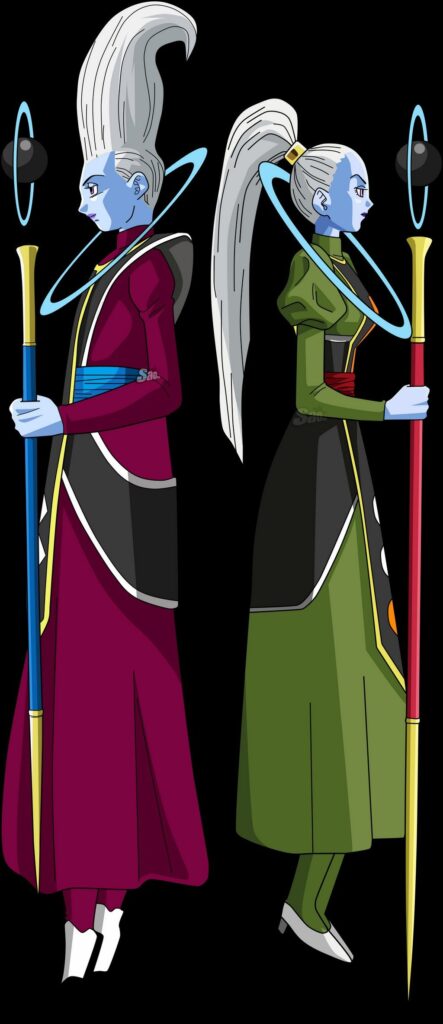
Dragon Ball often communicates strength through demeanor rather than direct combat. Characters who remain calm in the face of chaos are usually the ones who possess overwhelming ability.
Whis embodies relaxed confidence. He enjoys fine food, playful humor, and occasionally teasing Beerus, yet beneath that lighthearted personality lies unimaginable power. When he moves, even Gods of Destruction struggle to follow his speed.
Vados, on the other hand, projects a sharper presence. Her speech is precise, her posture composed, and her authority unmistakable. She rarely indulges in humor, and when she does, it carries a subtle edge that suggests total awareness of her superiority.
Some fans interpret this contrast as evidence that Vados might possess a more serious or refined form of strength. However, personality alone cannot determine power — especially among Angels, who rarely reveal their full capabilities. Still, these behavioral differences add another layer to the debate.
Training the Destroyers — A Quiet Display of Authority
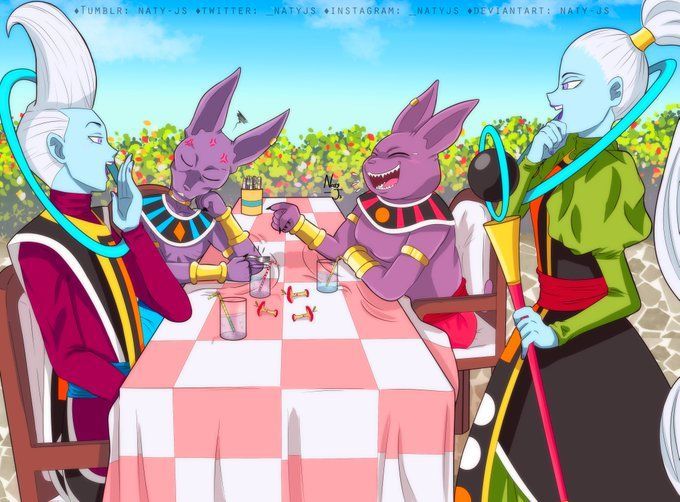
The way each Angel interacts with their God of Destruction provides further insight. Beerus, despite his terrifying reputation, behaves almost like a disciplined student around Whis. A single tap from Whis has been enough to render him unconscious, a reminder that their power gap is enormous.
Vados maintains a similar dynamic with Champa, though her approach often feels even more direct. She openly critiques him, corrects his decisions, and shows no hesitation when asserting control. Rather than appearing subordinate, she carries herself like a supervisor ensuring that her universe remains stable.
Does this mean she is stronger than Whis? Not necessarily. It may simply reflect differences in temperament. Angels are designed to stand above gods regardless of personality. Yet these interactions reinforce one undeniable truth — both siblings exist far beyond the destructive power that defines the gods themselves.
Feats, Implications, and the Problem of Measuring Angels
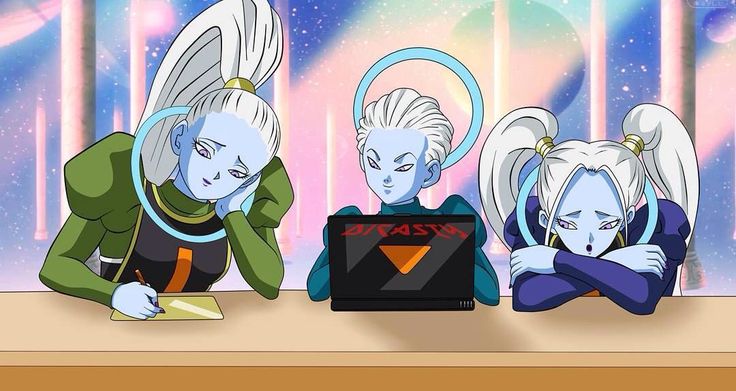
One of the greatest challenges in comparing Vados and Whis is the lack of serious combat from either character. Dragon Ball tends to reserve full power displays for moments of extreme narrative importance, and the Angels have never been pushed into such a scenario.
Still, Whis has offered small glimpses of what he can do. He has reversed time to prevent catastrophe, neutralized Beerus effortlessly, and trained Goku and Vegeta in techniques associated with divine movement. Each feat reinforces the idea that his power operates on a level mortals cannot hope to reach.
Vados has fewer on-screen demonstrations, but her status alone implies equivalent capability. Angels possess perfect movement, reflexes that require no conscious thought, and energy control so refined that exhaustion is almost meaningless. Trying to measure two beings like this is less about numbers and more about interpretation. It is not a matter of comparing flames — it is like comparing stars.
Could Vados Have Been Stronger Once?

A popular theory among fans suggests that Vados may indeed have been stronger in the past. The idea aligns with a familiar pattern: older siblings often begin with an advantage before younger ones close the gap through relentless effort.
If Whis devoted himself to intense training over time, surpassing his sister would be entirely plausible. Dragon Ball repeatedly emphasizes growth through discipline, and even divine beings may not be completely static.
However, the series has never confirmed such a shift. By leaving the timeline vague, Dragon Ball preserves the ambiguity that keeps fans speculating. Sometimes, the absence of answers is what keeps a debate alive.
Are Angels Even Meant to Be Ranked?
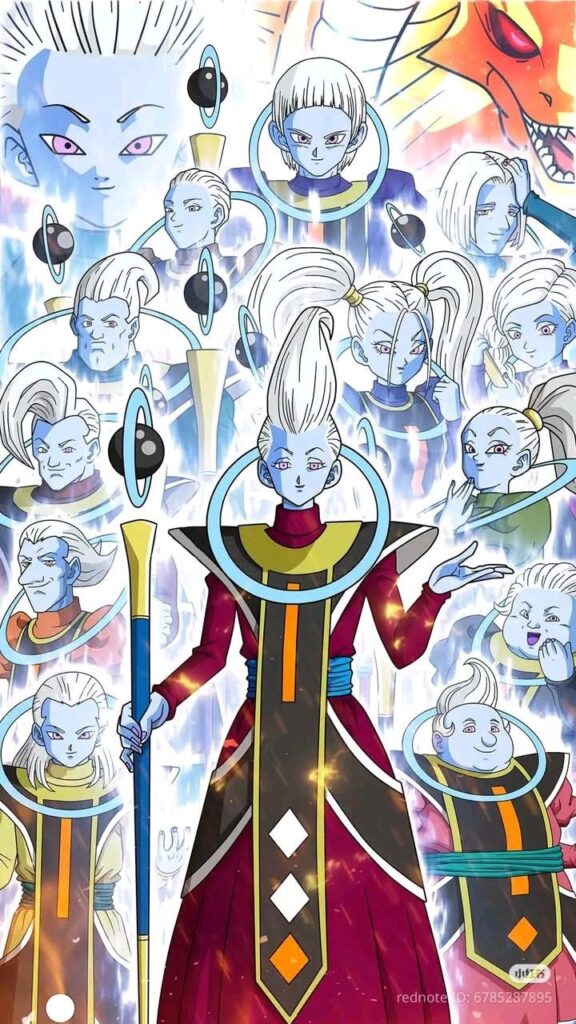
Another possibility is that the question itself misunderstands the nature of Angels. Unlike Saiyans, they are not competitors chasing the next breakthrough. They exist as a balanced order — cosmic constants rather than evolving warriors.
If Angels were vastly unequal, the harmony they maintain across universes could be threatened. This supports the idea that any differences between them are minimal, perhaps even irrelevant.
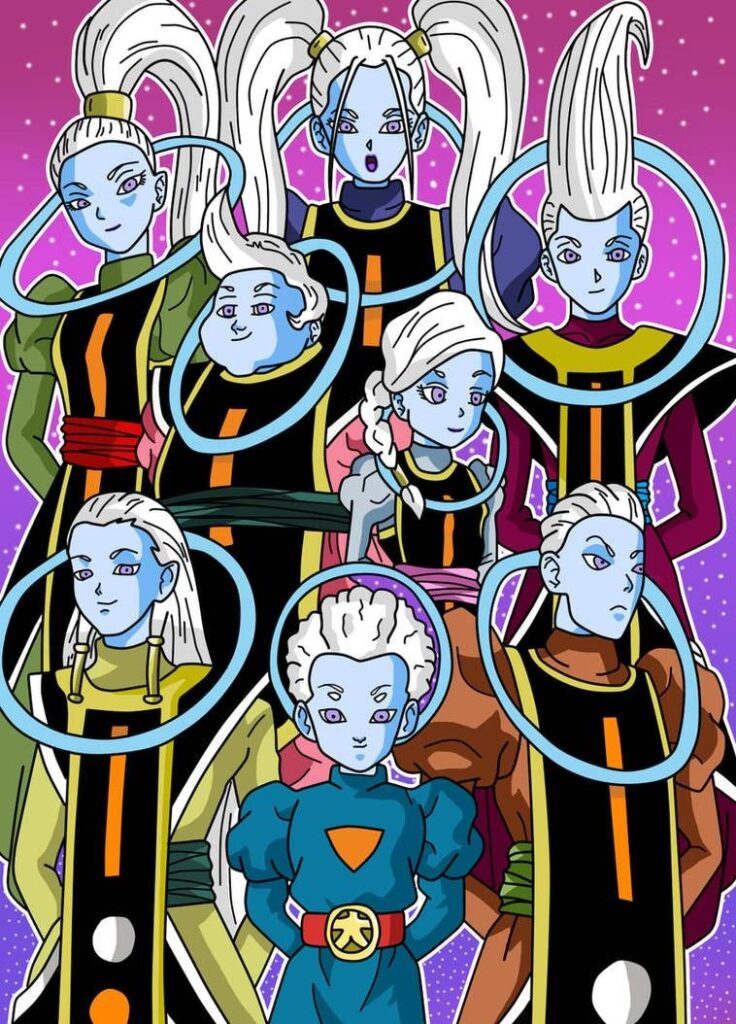
Above them all stands the Grand Priest, their father and the architect of their hierarchy. His presence suggests structure without rivalry, reinforcing the notion that Angels are designed to operate in equilibrium rather than conflict. From this perspective, asking who is stronger might miss the larger point.
Why Dragon Ball Protects This Mystery

Dragon Ball thrives on escalation, but it also understands the power of the unknown. If the exact limits of every Angel were revealed, the sense of wonder surrounding them would fade. By keeping their strength ambiguous, the series ensures that there is always a higher realm waiting beyond what we understand.
This narrative choice serves another purpose — it reminds viewers that no matter how strong mortals become, there are still peaks they cannot yet reach. The Angels embody that unreachable horizon. And as long as that horizon exists, the story retains its sense of infinite possibility.
The Final Verdict — The Angel Power Truth
So, is Vados stronger than Whis?
The most honest answer is that Dragon Ball has never given us definitive proof either way. What the series does suggest is that the gap between them, if it exists at all, is likely very small.
Three conclusions feel realistic. They may be equals, representing the same level of perfected strength. Vados may have once held the advantage before Whis surpassed her through training. Or their differences may simply be too insignificant to matter.
What seems unlikely is a dramatic imbalance. Angels appear crafted to exist near the same pinnacle of power. Perhaps the real takeaway is this: Whis and Vados are not rivals striving to outdo one another. They are cosmic guides, beings who have already transcended the endless struggle for strength that defines everyone else.
In a universe obsessed with breaking limits, they represent something rarer — the quiet ceiling of power itself.
And until Dragon Ball chooses to reveal more, the debate may be exactly what it was meant to be: a mystery that keeps fans looking upward, wondering just how far the ladder of strength truly goes.

