

For much of Dragon Ball’s history, Vegeta’s rivalry with Goku has been framed as a simple question of strength. Fans debate transformations, training methods, and techniques, all searching for the moment when the Prince of Saiyans might finally surpass his longtime rival. However, Dragon Ball itself quietly suggests a very different answer.
Vegeta’s inability to truly surpass Goku has never been about power. Instead, it stems from a deeper conflict—one rooted in identity, pride, and the emotional weight Vegeta carries into every battle. Long before power levels enter the conversation, Vegeta is already fighting a battle Goku does not share.
Vegeta Strength Has Always Been Earned the Hard Way

Vegeta has never relied on natural advantage. Every step forward in his journey is earned through discipline, sacrifice, and relentless self-pressure. Unlike Goku, who trains because he enjoys the process, Vegeta trains because he believes he must.This difference shapes how each character grows.
Vegeta’s strength is driven by necessity. He trains to avoid falling behind, to reclaim dignity, and to silence the fear of inadequacy that has followed him since childhood. His progress is impressive, but it is also heavy—burdened by expectations he never learned to put down.
Goku Approaches Strength Without Emotional Weight

Goku’s relationship with power is fundamentally different. He does not train to prove himself or to reclaim a lost legacy. He trains out of curiosity and joy, viewing combat as a form of exploration rather than validation.
Because Goku carries no emotional debt into battle, he adapts more freely. Loss does not humiliate him. Failure does not define him. Each challenge becomes an opportunity rather than a judgment. This emotional freedom allows Goku to grow in ways Vegeta cannot easily replicate.
Pride Defines Vegeta Limits

Vegeta’s pride is often seen as his greatest strength, but it also quietly restricts him. His identity is tied to who he believes he should be—Prince of Saiyans, warrior elite, rival to Goku. Every defeat threatens that identity, turning growth into a personal reckoning rather than a natural progression.
As long as Vegeta measures himself against Goku, his success is conditional. Victory means something only if it proves superiority. Progress matters only if it closes the gap. Goku, by contrast, never frames his growth around Vegeta at all.
A Rivalry That Only One Side Is Fighting
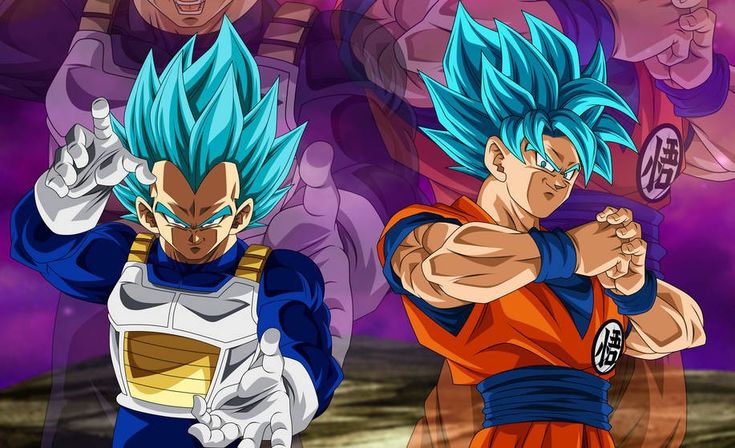
Perhaps the most overlooked aspect of their rivalry is that Goku does not experience it the same way Vegeta does. While Vegeta defines much of his journey through comparison, Goku rarely looks backward. Goku is not racing Vegeta. He is simply moving forward.
This imbalance means Vegeta is locked into a competition that offers no emotional resolution. Even if he briefly surpasses Goku, the victory is temporary, because Goku is already focused on the next challenge rather than the outcome.
Growth Versus Validation

At the heart of their difference lies motivation. Goku seeks growth for its own sake. Vegeta seeks confirmation of worth. When Goku encounters a stronger opponent, he asks what he can learn. When Vegeta encounters one, he questions what it says about him. That distinction shapes how each responds to limits, failure, and transformation. Goku evolves by embracing uncertainty. Vegeta struggles because uncertainty threatens the identity he has spent his life defending.
Vegeta True Journey Isn’t About Surpassing Goku

Dragon Ball gradually reveals that Vegeta’s most meaningful development has nothing to do with winning. His real progress appears in moments of humility, responsibility, and acceptance—when he fights not for pride, but for others.
These moments suggest that Vegeta story is not designed to end with him surpassing Goku. It is designed to show what happens when a warrior learns that worth does not come from comparison. Ironically, the moment Vegeta stops needing to surpass Goku may be the moment he grows the most.
Final Thoughts
Vegeta cannot truly surpass Goku—not because he lacks strength, discipline, or resolve, but because he carries a burden Goku never picked up. Goku fights to discover what lies ahead. Vegeta fights to reconcile what he has lost. Until that difference disappears, Vegeta will always be chasing someone who is already moving on. And that quiet truth, more than any transformation or power gap, defines their rivalry.
The Times Vegeta Actually Was Ahead
Honesty first: the title of this post is an argument, not a scoreboard, and the scoreboard has entries on Vegeta’s side. The clearest came during the battle with Beerus, when the God of Destruction struck Bulma and Vegeta’s rage detonated. For a few blazing moments, his Super Saiyan 2 output exceeded anything Goku had managed against Beerus up to that point. It did not last, and it did not win the fight — but it happened. Vegeta, fueled by fury over his wife, briefly stood where Goku could not. Anyone who says Vegeta never surpassed Goku is ignoring a scene the story itself put on screen.
Ultra Ego’s debut was a different kind of milestone. When Vegeta unveiled the form Beerus had been shaping him toward, he was not catching up to Goku’s Ultra Instinct — he was standing on entirely new ground of his own. For the first time in the modern era, the two rivals held genuinely different kinds of power at the same time, and neither could be called a copy of the other. That is not Vegeta surpassing Goku in the old sense. It is something the rivalry had never produced before: Vegeta arriving somewhere first, on a road only he was walking.
And then there is the quietest entry, which may matter most. At the end of Super Hero, after all the spectacle, Vegeta finally won a sparring match against Goku — cleanly, on screen, no asterisks. It was not a battle for the fate of the universe. Nobody’s life was at stake. But after decades of the rivalry being defined by Goku landing the last blow, Vegeta took the round. The rivalry is closer than this post’s title suggests, and the story knows it.
The Story Needs Goku in Front — Barely
There is a structural reason the gap never fully closes, and it has nothing to do with power levels. Goku is the engine the entire franchise orbits. The story is built around him discovering what lies beyond the next horizon — a new technique, a stronger opponent, a deeper understanding. Every other character’s arc is positioned relative to that forward motion. If Goku stopped being the one in front, the narrative would lose its compass; the audience would no longer know which direction “forward” even is.
Vegeta’s arc, meanwhile, requires a target the way a fire requires oxygen. His pride, his discipline, his entire character development is fueled by the chase — by the existence of someone ahead of him to measure himself against. Take that away and the arc does not resolve; it evaporates. A Vegeta with nothing to pursue is a Vegeta with nothing to say. The story keeps Goku barely in front not to diminish Vegeta, but to keep Vegeta’s story alive.
Consider what would actually break if Vegeta moved permanently ahead. Goku without a horizon becomes static — a hero with nothing to discover is just a strong man standing still. And Vegeta without a target loses the tension that has defined him since his introduction; his pride would have nothing left to prove and nowhere left to grow. Both characters’ stories would collapse at once. The rivalry must stay close enough to burn and unresolved enough to continue. That is not a flaw in the writing. It is the writing.
Ultra Ego Changed What ‘Surpass’ Means
For most of Super, Vegeta was running Goku’s race: Super Saiyan God, Super Saiyan Blue, and then the long shadow of Ultra Instinct. Every step was a reaction — Goku found a new summit, and Vegeta clawed his way up the same mountain. That is the version of the rivalry where “surpass” has only one meaning: climb past the other person on the same ladder. It is also the version where Vegeta was structurally doomed to arrive second, because the ladder was built for Goku’s way of fighting.
Ultra Ego broke the pattern because Beerus taught Vegeta to stop imitating. Where Ultra Instinct demands calm and clarity — Goku’s natural state in battle — Ultra Ego feeds on the opposite: battle lust, damage taken and converted into strength, the sheer Saiyan joy of the fight. It is a technique built from Vegeta’s nature rather than imposed on it. For the first time, Vegeta was not chasing Goku’s summit. He was building his own.
That reframes the entire rivalry. If the two strongest Saiyans are climbing different mountains, then “surpass” stops being a single ladder and becomes a harder question: whose summit is higher, and does the answer even stay fixed? Ultra Instinct and Ultra Ego have different strengths, different costs, and different futures. The modern rivalry is not about who stands one rung above the other anymore. It is about two different definitions of strength evolving side by side — and that is a far more interesting story than a rematch.
| Era | Who was ahead | By how much (in story terms) |
|---|---|---|
| Saiyan Saga | Vegeta | Decisively — he outmatched Goku until the group’s combined effort brought him down |
| Cell era | Swung both ways | Vegeta briefly after the Time Chamber; Goku decisively with mastered Super Saiyan |
| Buu era | Goku | By a hidden transformation — Super Saiyan 3, which Vegeta never saw coming |
| Early Super | Goku, then even | Goku held the god forms first; Vegeta closed the gap by the Universe 6 arc |
| Tournament of Power | Goku | By Ultra Instinct — a technique Vegeta’s path could not reach |
| Post-Super Hero | Effectively even | The gap is measured in moments now, not tiers — Vegeta even won their spar |


Pingback: Dragon Ball Characters Who Never Got Closure