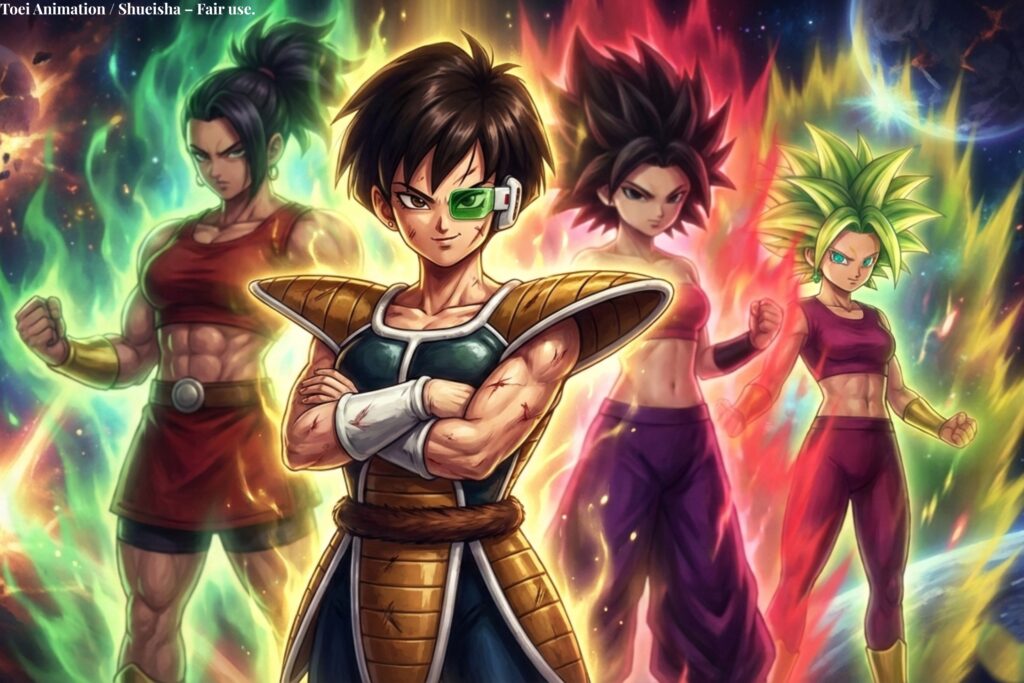
When Dragon Ball fans talk about powerful Saiyan warriors, the conversation usually focuses on legendary male fighters like Goku, Vegeta, or Broly. However, the Saiyan race also produced several female warriors who displayed impressive strength, courage, and battle skill. Among them, Fasha is often remembered as one of the earliest and most iconic female Saiyans.
This raises an interesting question for fans. How strong was Fasha compared to other female Saiyans introduced later in the Dragon Ball franchise? Was she truly the strongest female Saiyan warrior of her time, or have newer characters surpassed her completely?
To answer this, we need to examine Fasha’s abilities and compare her fairly with other notable Saiyan females across Dragon Ball history.
Who Was Fasha
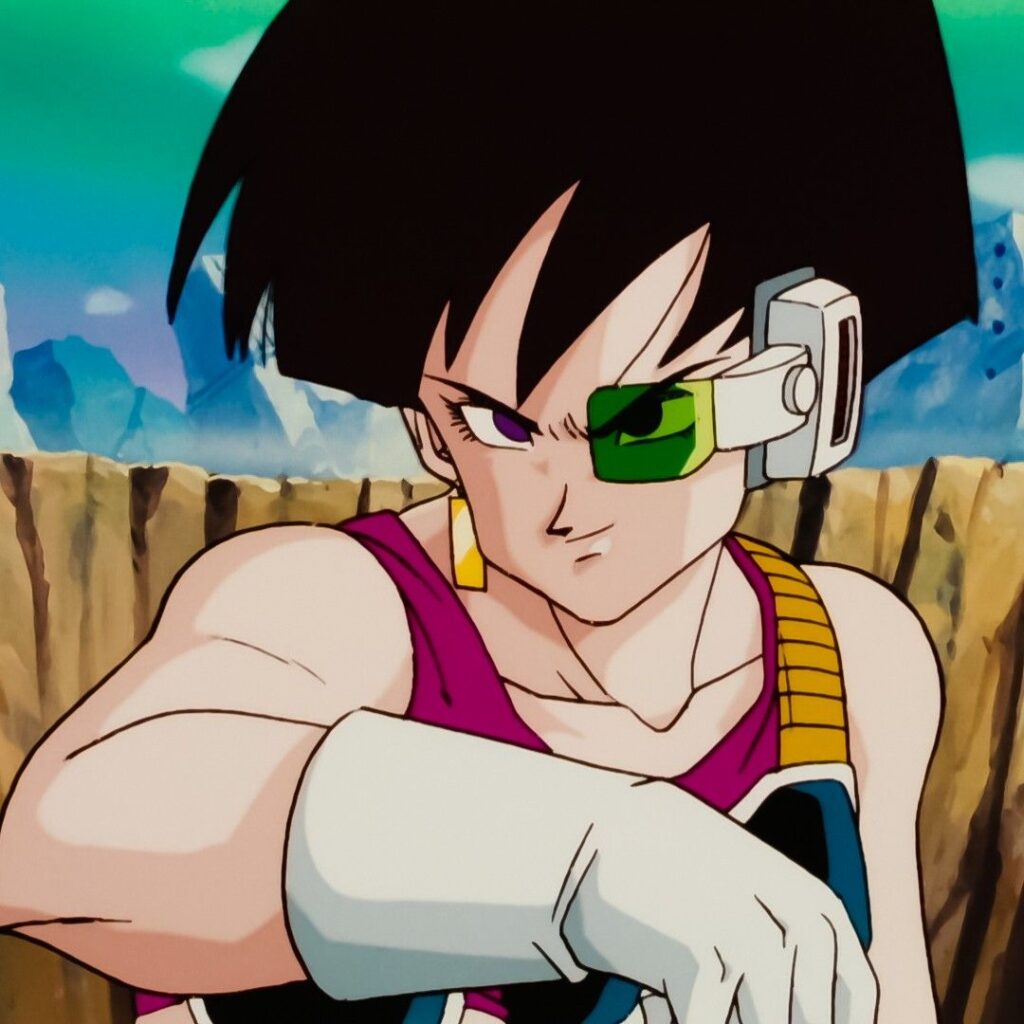
Fasha was a low-class Saiyan warrior and a core member of Bardock’s squad. Unlike many Saiyans who relied purely on brute force, Fasha was shown to be tactical, disciplined, and fiercely loyal to her team. She fought on the front lines alongside elite warriors and was trusted in dangerous missions.
At the time of her appearance, most Saiyans were soldiers rather than transformation-focused fighters. This means Fasha strength should be judged within the context of her era, not by modern god-level standards. What made her impressive was not just her power level, but her battlefield effectiveness and fearlessness.
Fasha’s Strength and Combat Ability
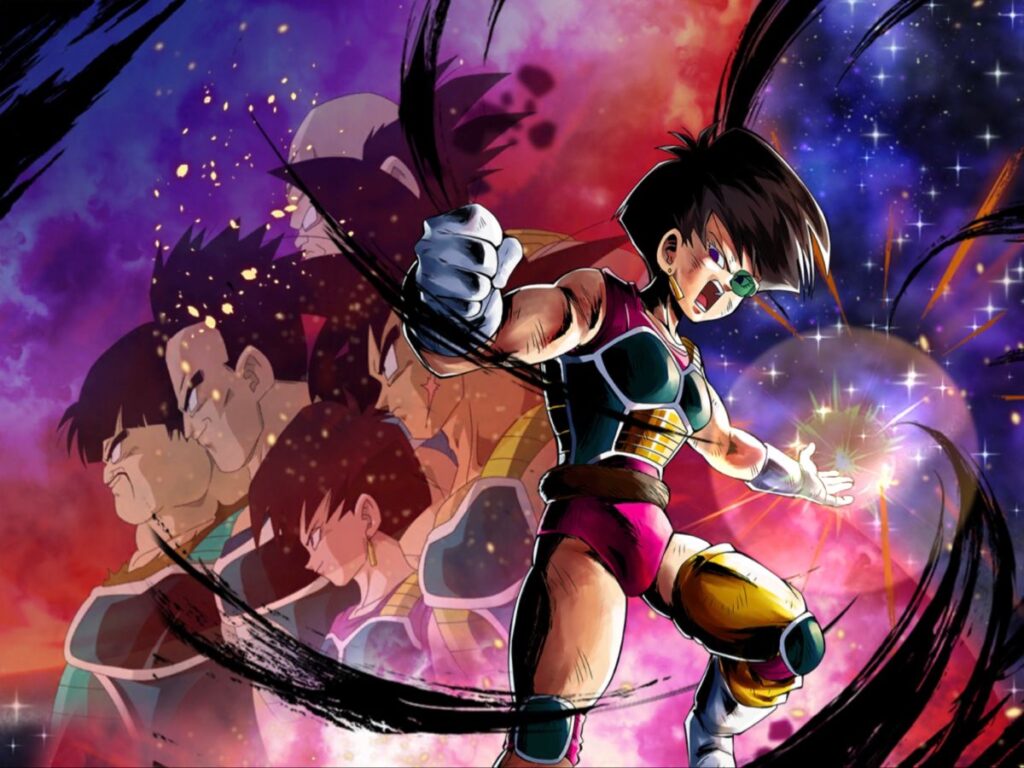
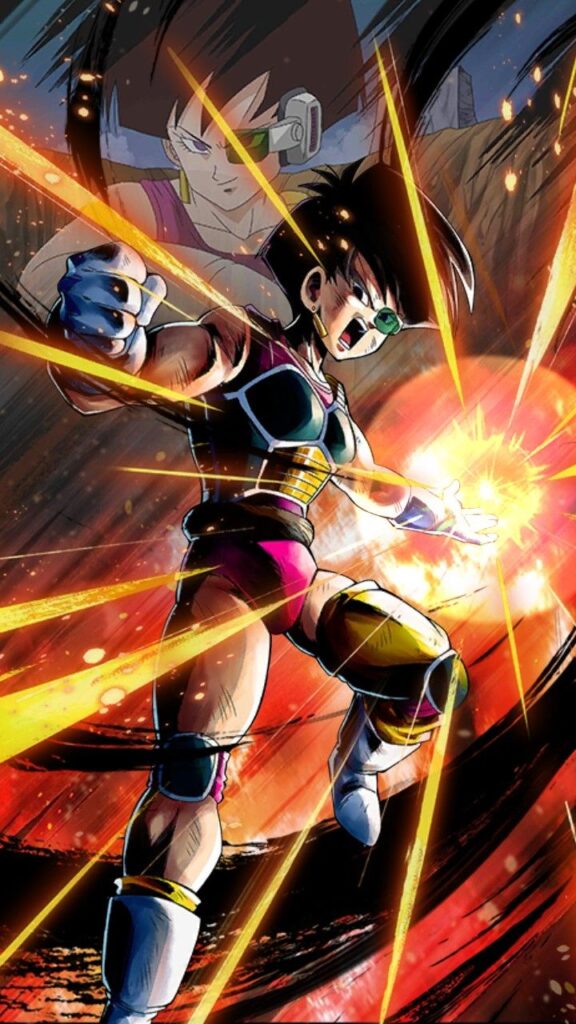
Fasha demonstrated strength that placed her well above average Saiyan soldiers. She handled combat efficiently, defeated enemies quickly, and showed no hesitation in battle. Her fighting style was aggressive yet controlled, suggesting extensive experience.
Unlike later Saiyans, Fasha did not rely on Super Saiyan transformations. Her power came from training, combat experience, and natural Saiyan toughness. In a time when energy control was less refined, this made her especially dangerous.
However, her biggest limitation was the era she lived in. Saiyans at that time had much lower power ceilings compared to later generations.
Comparing Fasha to Other Saiyan Females
To fairly judge Fasha strength, we need to compare her to other known female Saiyans who appeared later in the series. These characters benefited from evolving power systems, transformations, and exposure to god-level combat.
Fasha vs Caulifla
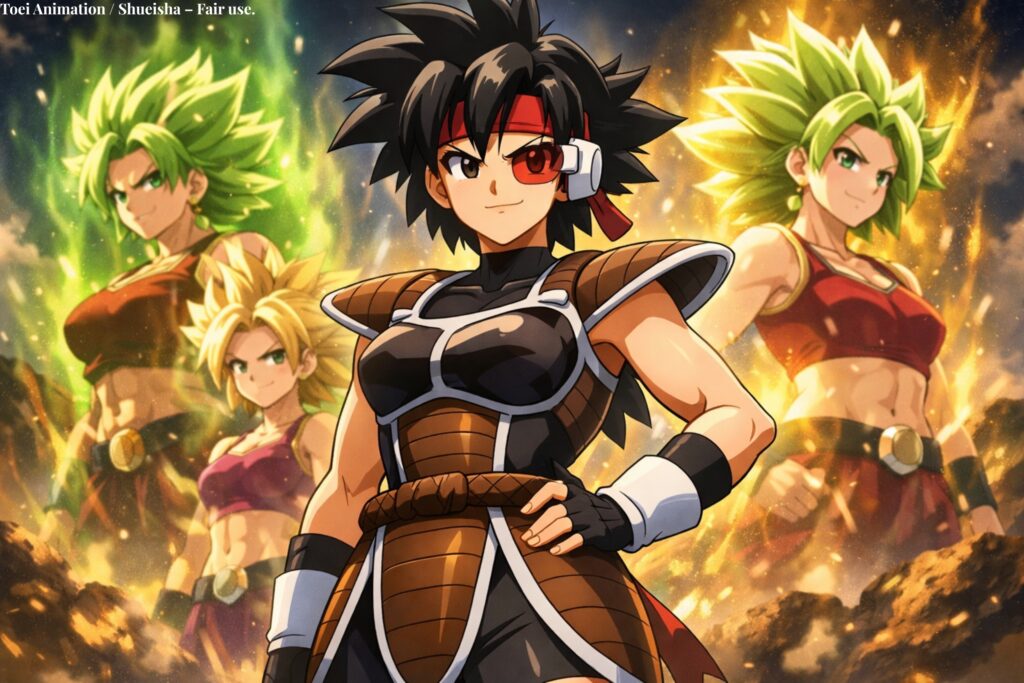
Caulifla is one of the most naturally gifted Saiyans ever shown. She learned Super Saiyan transformations extremely quickly and possessed strong combat instincts despite limited formal training.
In raw power, Caulifla far surpasses Fasha. Her access to Super Saiyan forms and higher base power gives her a massive advantage. However, Fasha likely had greater battlefield discipline and teamwork experience.
In a straight fight, Caulifla would win due to overwhelming power, but Fasha represents a more traditional warrior mindset.
Fasha vs Kale
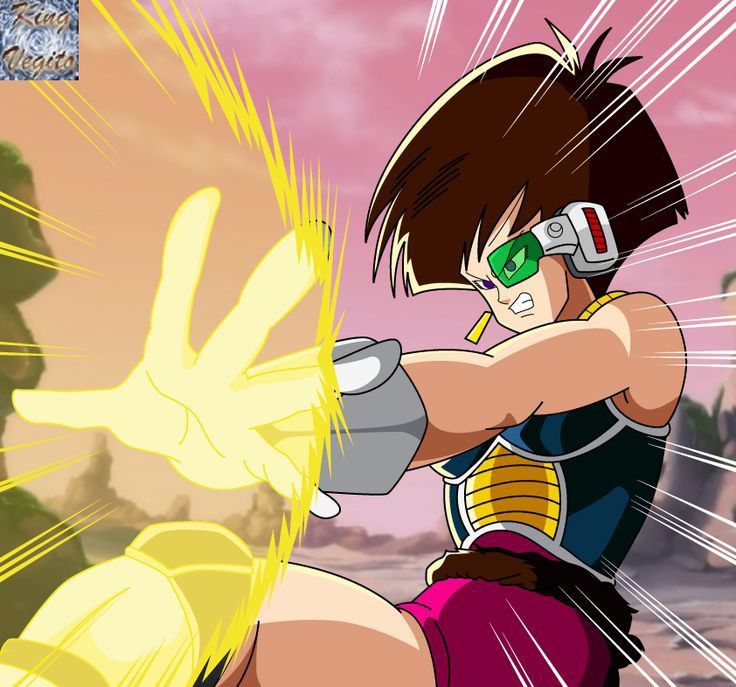
Kale is on an entirely different level compared to most Saiyans. Her Legendary Saiyan transformation grants her explosive strength, extreme durability, and limitless growth potential.
At full power, Kale would defeat Fasha instantly. There is no realistic comparison in terms of raw strength. However, Kale’s power comes with emotional instability, especially early on.
Fasha, by contrast, had full control over herself in combat. While Kale is far stronger, Fasha was the more reliable and disciplined warrior.
Fasha vs Kefla
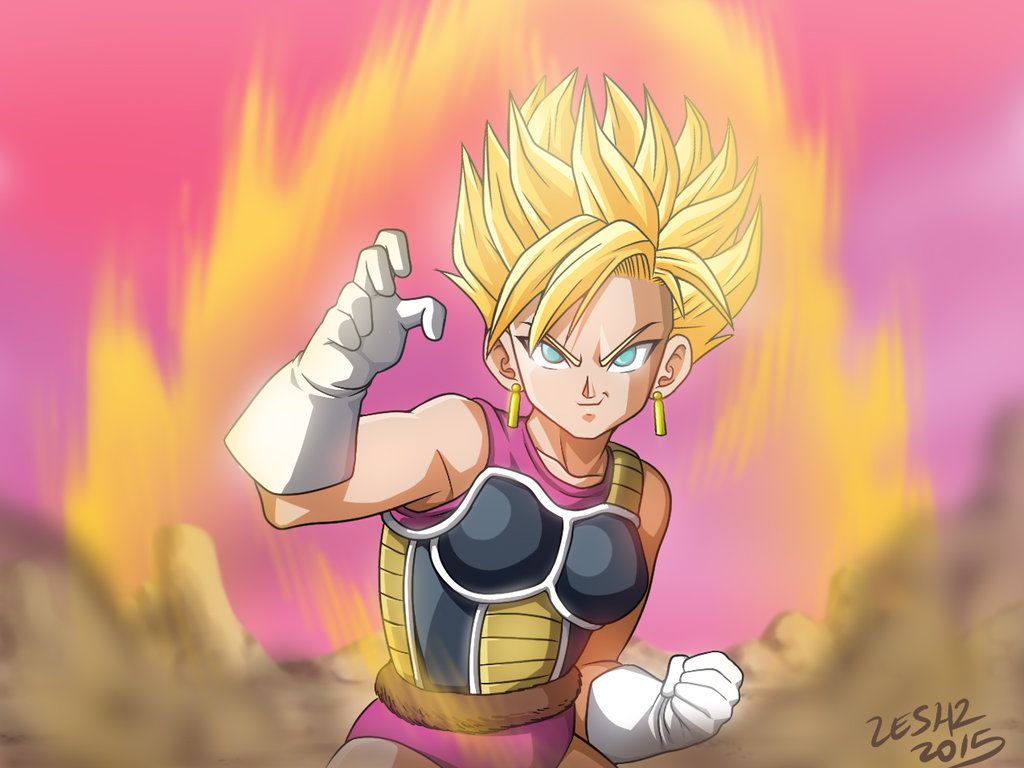
Kefla is the fusion of Caulifla and Kale and represents one of the highest peaks of female Saiyan power. She pushed Ultra Instinct Goku and displayed speed and aggression beyond most mortals.
There is no version of Fasha that could compete with Kefla in a direct fight. Kefla exists on a god-adjacent level of power that did not exist during Fasha’s time.
This comparison mainly highlights how much Dragon Ball power scaling evolved over time.
Fasha vs Gine
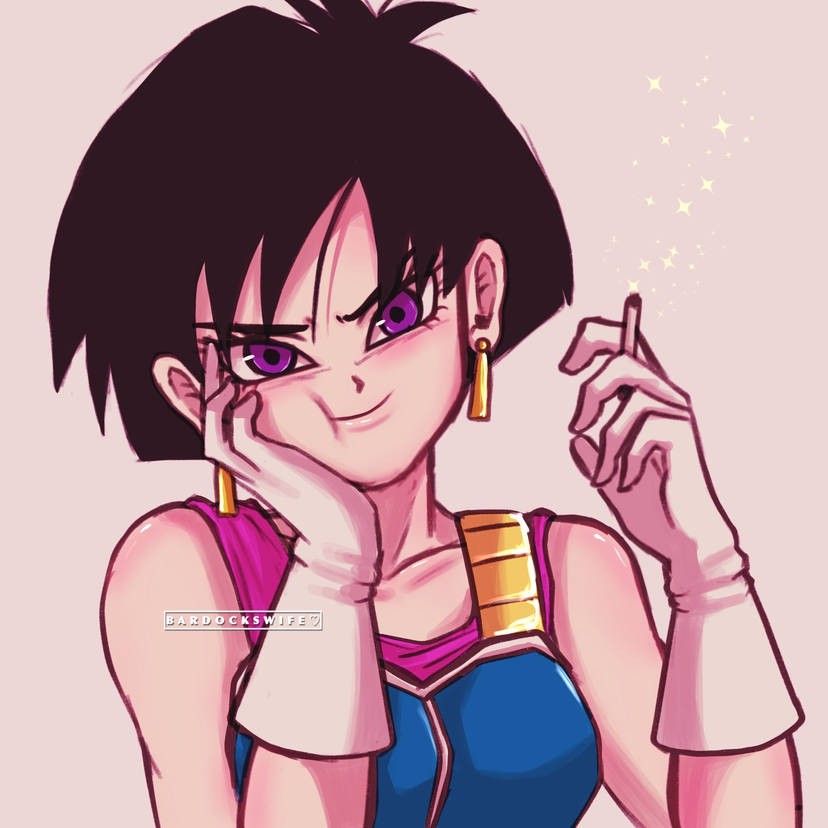
Gine, Goku’s mother, was not a frontline warrior like Fasha. She was kinder, less aggressive, and avoided combat roles.
In this comparison, Fasha is clearly stronger. She was trained for battle, while Gine focused on support roles. This shows that Fasha stood out even among female Saiyans of her own generation.
Era Matters More Than Raw Power
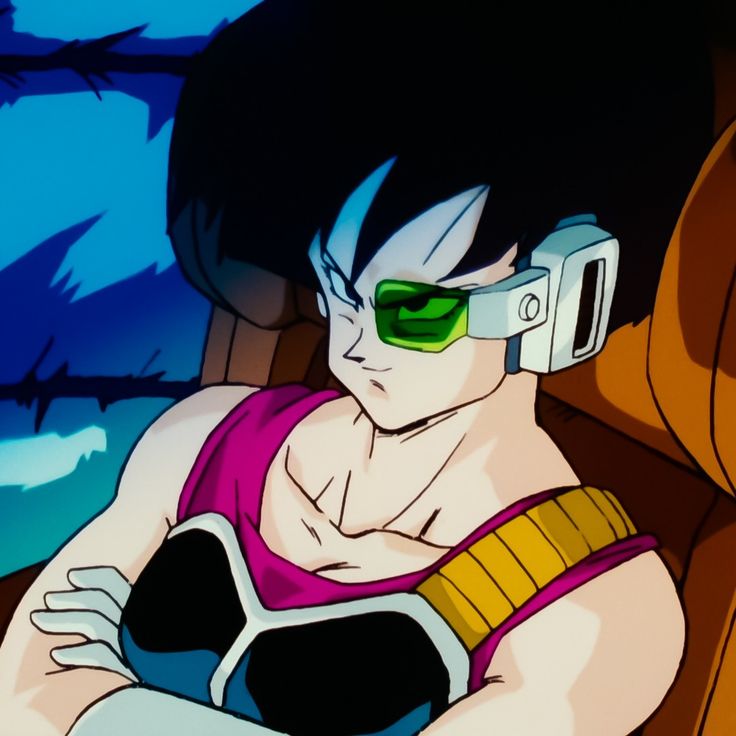
One of the most important factors in this discussion is the era in which each character existed. Fasha lived in a time when Saiyans were conquerors, not transformation-focused fighters.
Later Saiyan females benefited from advanced training methods, exposure to god-level combat, and transformation systems that massively increased power. Comparing raw numbers across eras is unfair without context.
If Fasha had survived and trained under modern conditions, it is very possible she would have reached far greater heights.
What Made Fasha Special
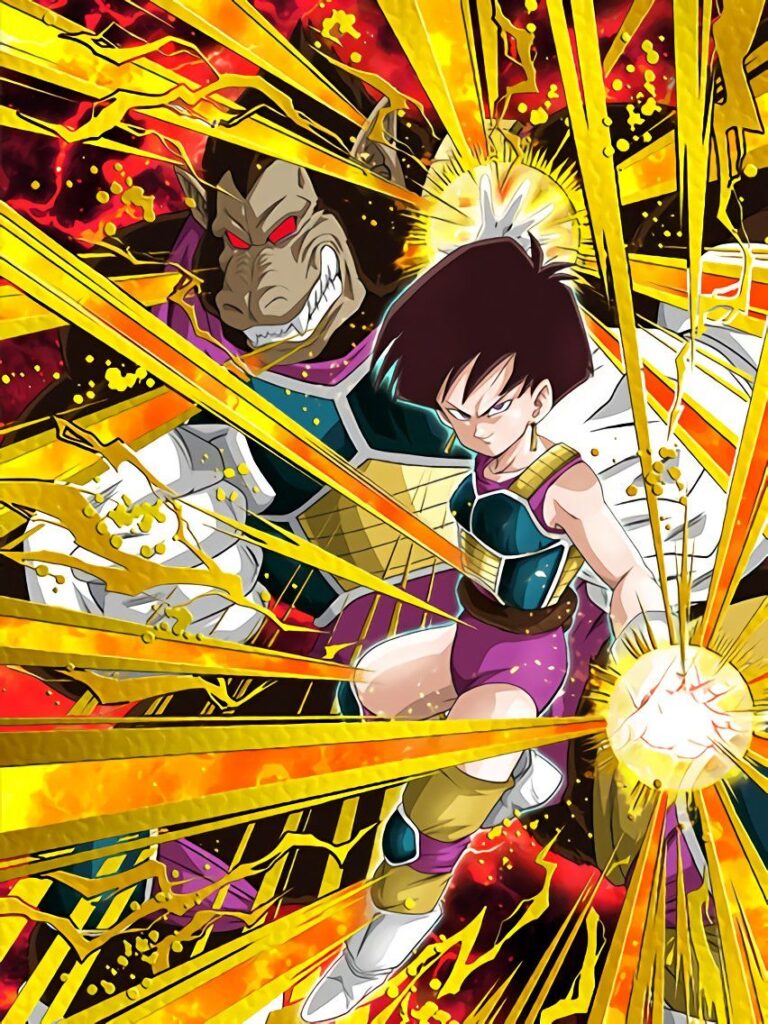
Fasha’s true strength was not just her power level. It was her mentality. She was fearless, loyal, and fully committed to her role as a warrior. She fought knowing the risks and never hesitated to protect her team.
In many ways, she represents the original Saiyan spirit before power inflation changed the series. Her strength lies in authenticity rather than spectacle.
Who Was the Strongest Saiyan Female Warrior Overall
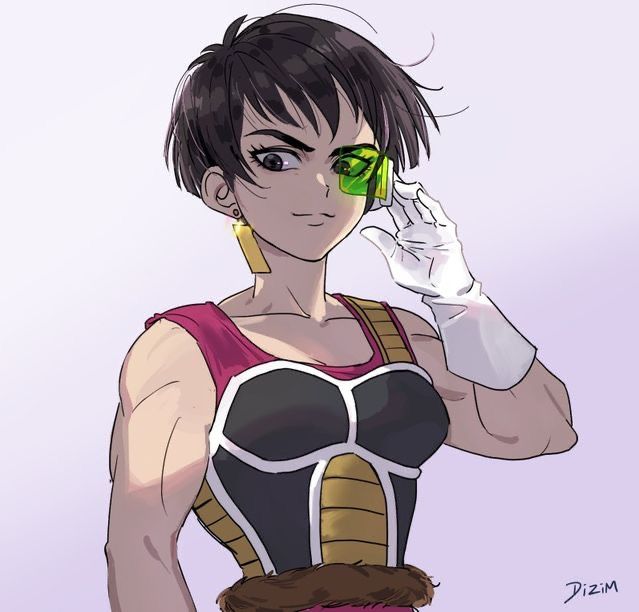
If we judge purely by raw power, then characters like Kale or Kefla are unquestionably stronger than Fasha. Modern Saiyan females operate on a much higher power scale.
However, if we judge by warrior mindset, battlefield experience, and reliability, Fasha stands among the strongest of her kind. She was a true Saiyan soldier, shaped by constant warfare rather than sudden power awakenings.
Final Verdict
Fasha was not the strongest Saiyan female in terms of raw power when compared to later characters. However, she was one of the strongest and most complete warriors of her era.
She represents a time when Saiyans survived through combat skill and courage rather than transformations alone. While newer characters surpassed her in power, few matched her discipline and warrior spirit.
In that sense, Fasha remains one of the most respected Saiyan female warriors in Dragon Ball history.
Fasha’s Complicated Canon Status
Before ranking Fasha against anyone, it helps to be honest about where she actually comes from. Fasha, also known as Seripa in Japanese materials, was created for the 1990 television special about Bardock, where she served as the only woman on his elite squad. That special was an anime-original story, and for years it was simply how fans pictured Bardock’s team: a tight group of working soldiers whose fate was tied to Planet Vegeta’s final days.
The complication arrived decades later. Akira Toriyama’s own Dragon Ball Minus, and the later Broly film built from his writing, retold Bardock’s story with a noticeably different framing. Gine, shown in this article as a gentle non-combatant, became central to that version, while Bardock’s TV special squad simply did not appear in it. The standard understanding among fans is that this leaves Fasha and her teammates in the franchise’s gray zone: beloved, instantly recognizable, and still regularly referenced in games and merchandise, but not cleanly placed inside the main continuity as Toriyama later defined it. That is a description of how the fandom generally treats her status, not a court ruling, and it does not make her any less real to the fans who grew up with the special. It does mean every comparison involving her carries a small asterisk, which honest articles should admit.
The Bar Moved: Caulifla and Kale Rewrote the Scale
Whatever Fasha’s status, the terms of this debate changed permanently when Universe 6 entered the main series. Caulifla and Kale were not background characters from an old special. They were Saiyans developed on screen, in the central storyline, reaching Super Saiyan and then pushing far beyond it in front of the entire audience. Caulifla grasped transformations with a speed that stunned even veteran fighters, and Kale’s Legendary form placed her in a bracket that the old era simply had no answer for. Their fusion, Kefla, then raised the ceiling again.
That on-screen, main-series status matters as much as the power itself. When fans today ask who the strongest female Saiyan is, the default evidence is what the current series shows, and the current series shows Universe 6’s pair operating at levels Fasha’s generation never approached. Nothing can retroactively change that. Fasha’s case was never really about the modern scale, though. It rests on her era: an elite low-class squad context in which she was trusted on dangerous missions, fought as a professional, and held her own without a single transformation to lean on. Judged inside that context she is exceptional. Judged by the scale Caulifla and Kale created, nobody from her generation survives the comparison, and pretending otherwise would be unfair to both sides.
Why Fasha Still Gets Articles Like This One
It is worth asking why a character from a single 1990 special, with no place in the modern main storyline, still anchors comparison articles more than three decades later. Part of the answer is simple scarcity. In the entire Z era, female Saiyans barely existed on screen, and Fasha was the one who actually fought. She was not a love interest, a hostage, or a background face in a crowd scene. She was a working soldier with a real personality — teasing, confident, loyal to her squad — in a special fans genuinely love, which gave her a completeness that characters with far more screen time sometimes lack.
The games did the rest. Dragon Ball video games have kept Fasha playable for decades, generation after generation of consoles, putting her in rosters alongside characters from every era and letting new fans meet her as an equal rather than a footnote. Every new player who picks her up eventually asks the same question this article asks: how good was she, really? So the articles keep coming, because she represents something the flashier modern era rarely offers — a Saiyan warrior from the time when being a Saiyan meant being a soldier first, and when courage and craft had to substitute for the transformations that decide everything now.
| Warrior | Era | Claim to the title (as this post frames it) |
|---|---|---|
| Fasha | The Z era of Planet Vegeta, before its destruction | The most complete warrior of her own era: elite squad experience, skill, and control without transformations |
| Caulifla | Universe 6, the Dragon Ball Super era | The most naturally gifted; mastered Super Saiyan forms at a speed that puts her far beyond Fasha in raw power |
| Kale | Universe 6, the Dragon Ball Super era | The raw power peak among individuals, through her Legendary Saiyan transformation |
| Kefla | Universe 6, the Dragon Ball Super era | The fusion ceiling; god-adjacent power that no version of Fasha could compete with |
| Gine | The Z era of Planet Vegeta | Not a frontline fighter; a kind support-role Saiyan whom Fasha clearly outclasses in battle |