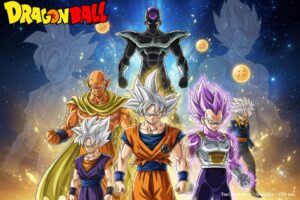
Every long-running series has a bench. Most of them are full of players who were never going to start. Dragon Ball’s bench is different: it is full of headliners. Fighters who were built like the future of the franchise now show up in crowd shots, train forever off-screen, or survive mainly as the punchline of jokes other characters tell. Fans feel this, and most “wasted potential” lists try to capture it by ranking vibes — who the fandom feels sorriest for, who gets the most “what if” threads.
This list works differently. It ranks the gap: demonstrated peak minus story usage. What did the character provably do — or what was stated about them, on the page, in the story? And what did the narrative actually give them afterward? A character nobody expected anything from cannot score high here, no matter how beloved. A character positioned as the headline of tomorrow and then used as a footnote climbs straight to the top. That is the whole method, and it produces a ranking that looks nothing like the usual suspects in the usual order.
Two things this list is not: it is not a power ranking — the weakest character here was never meant to be strong, and the strongest was once meant to be the protagonist. And it is not a popularity contest. It is an audit. The books are open. Here is what eight Dragon Ball characters showed, what they were promised, and what the story did with them instead — counting down from the smallest gap to the widest in the franchise.
How We Ranked Them
The formula is simple: GAP = demonstrated peak − story usage. Every entry needs both sides of the subtraction, with evidence you can point to.
Demonstrated peak means one of two things: a feat the character actually performed on the page or screen (a victory, a transformation, a technique nobody else had), or a statement the story itself made about them (a rival’s assessment, a mentor’s declaration, a narrator’s framing). Headcanon does not count. “He could have beaten Cell if—” does not count. Only what happened, or what was said.
Story usage means what the narrative gave the character after that peak: arcs, fights, roles, development. Screen time alone is not usage — standing in the background of a crowd shot for forty years is the opposite of usage. It is the ledger going quiet.
This is why the usual favorites land in unusual places. A character with a modest peak and modest usage — even a fan favorite — mathematically cannot outrank a character with a towering peak and a near-zero ledger. And a character whose waste got repaired earns the credit on the record: one entry on this list is mid-repair right now, and pretending otherwise would be dishonest. The gap is the gap, but a gap that is closing still counts differently than one that is widening.
One more rule, the honesty rule: no invented quotes, no borrowed arguments. Other outlets have published their own versions of this topic. The method here — the subtraction, the ledger, the gap — and every word of the argument are this article’s own.
8. Chiaotzu — The Unique Toolkit, Zero Deployment
The demonstrated peak: Chiaotzu has something no other Earth fighter has: genuine psychic ability. His telekinesis can freeze opponents in place — he used it to paralyze Goku mid-fight at the 22nd World Martial Arts Tournament — and his self-destruction technique against Nappa was a real self-sacrifice play, the kind of move that ends arcs for other characters. It failed. Nappa survived it without a scratch, and the story treated the moment as proof of the Saiyans’ monstrous gap over Earth’s fighters. But the intent and the toolkit were real.
What the story did instead: nearly nothing, for nearly forty years. Chiaotzu became Tien’s permanent plus-one: present in crowd scenes, absent from plots. He has not had a fight of consequence since the Saiyan Saga, and his psychic powers — the single most distinctive ability set among the human cast — were never developed, never combined with anyone’s training, never given the support-role showcase that modern Dragon Ball loves to build around unusual abilities.
The gap: real, but the smallest on this list, because the demonstrated peak was modest. Chiaotzu was never positioned as a headliner. Still, the entry stings in a specific way: his powers are exactly the kind of thing modern Dragon Ball builds support roles from — the specialist with one strange trick who turns a team fight. He never got to be that specialist. He just stood next to the one who also stopped getting fights.
7. Videl — The Buildup Abandoned
The demonstrated peak: Videl’s introduction is one of the most efficient fighter buildups in the series. The daughter of the “world champion” who is secretly a fraud, she is introduced as a genuinely serious martial artist — a crime-fighting teenager strong enough that her reputation reaches Gohan before she does. Then she does something almost no non-fighter in the series manages: she learns to fly, the Bukujutsu technique, in days. Her fight at the 25th World Martial Arts Tournament against Spopovich is brutal and brave; she refuses to stay down long past the point of sense. The story was clearly building a fighter.
What the story did instead: early, total retirement. Marriage to Gohan and motherhood to Pan wrote Videl out of the fighter column so completely that later material barely remembers she could fight at all. She is present as a wife, a mother, a smiling face in family scenes — and absent as the martial artist her introduction promised. Relative to her screen time, the gap between the Videl of the introduction arc and the Videl of everything after is one of the steepest on this list.
The gap: the story spent a full arc convincing us this person was a fighter, then spent decades treating the arc as a prologue to domesticity. Nothing about her later appearances is bad; they are simply not about the thing she was introduced to be.
6. Yamcha — The Fall From First Friend to Punchline
The demonstrated peak: Before he was a meme, Yamcha was Goku’s first real rival-companion: a desert bandit strong enough to push early Goku, a regular at the World Martial Arts Tournaments, a core member of the crew through Dragon Ball and into Z. He was never the strongest, but he was a somebody — a fighter the story took seriously enough to put in its biggest arenas.
What the story did instead: turned his worst moment into his identity. The Saibaman killed him in the Saiyan Saga, and that single image — Yamcha in the crater — became the internet’s shorthand for failure, repeated until the character and the joke fused. To be fair, Dragon Ball Super partially rehabilitated him: the baseball episode (ANIME) is a genuine fan favorite, and it works because it lets Yamcha be charming, competent, and funny on his own terms. But note what it rehabilitated him as: a comedian, not a fighter. The show found a use for Yamcha the personality while leaving Yamcha the martial artist exactly where the Saibaman left him.
The gap: reputational as much as narrative. Few characters in anime have fallen so far in the audience’s eyes from a starting point so respectable. The baseball episode proves the franchise still likes Yamcha — it just no longer believes in him, and belief is the currency this list counts.
5. Launch — The Only Character Wasted by Accident
The demonstrated peak: Launch was a headline cast member of early Dragon Ball. The setup was unforgettable: a sweet, blue-haired girl who transforms — via sneeze — into a foul-mouthed, gun-toting blonde with the opposite personality. She lived at Kame House, she drove subplots, she was part of the furniture of the series’ most beloved era. For a stretch of the story, she mattered the way Bulma mattered: a core member of the ensemble with a gimmick that never got old.
What the story did instead: nothing, by accident. Launch did not get written out with a farewell arc or a noble death. She simply stopped appearing — and the reason, as series creator Akira Toriyama himself later acknowledged in interviews, was that he had forgotten about her. That admission, paraphrased from his own comments over the years, makes Launch the most literal entry on this list. She was not sidelined. She was not outgrown. She was misplaced — a main-cast character lost down the back of the author’s sofa, never retrieved.
The gap: impossible to compute and impossible to ignore. Every other character here lost a fight with the narrative. Launch never got into the ring; the narrative forgot the appointment. There is something almost pure about it — the only waste on this list with no in-story explanation at all.
4. Tien Shinhan — The Craftsman Benched
The demonstrated peak: Tien’s résumé is, on paper, one of the three best among Earth’s human fighters. He won the 22nd World Martial Arts Tournament — he beat Goku in a final, which puts him in a club with almost no members. He is the originator of techniques the series still uses decades later: the Kikoho (Tri-Beam), which he fired at Semi-Perfect Cell in one of the most heroic holding actions in the franchise, and the Taiyoken (Solar Flare), a utility technique the entire cast borrows forever. Tien was not just strong; he was an inventor, a craftsman of the art itself.
What the story did instead: gave him a dojo and a Tournament of Power exit that satisfied nobody. In Super, Tien runs a martial arts school — a fine life, a dead end narratively — and his big franchise-capping tournament appearance ended early and unceremoniously, the craftsman dismissed before the craftsmanship mattered. The series that still fires his Solar Flare in every other arc could not find him a fight.
The gap: a top-three human résumé against a bottom-three usage rate. Tien did not fade because he was weak; he faded because the story stopped being about humans, and it never bothered to tell him. His techniques outlived his relevance, and they air every week as a reminder.
3. Raditz — The Brother Erased
The demonstrated peak: Raditz is Goku’s brother — his own blood, the Saiyan who opened Dragon Ball Z and with it the entire cosmic half of the franchise. His arrival recontextualized everything: Goku was not just a strange strong boy, he was an alien, and his family was coming. It took Goku and Piccolo fighting together, with Goku sacrificing his own life, to kill him. As an opening statement, it is one of the great pilot episodes in anime.
What the story did instead: erased him. Raditz died in the opening episodes and was never revived, never meaningfully mentioned, never mourned on the page in the decades since. To be careful and precise: later material barely touches him at all — the exception is Bardock-era manga flashbacks (MANGA), which show him in the family orbit without giving him a story of his own. A family thread the franchise simply dropped: Goku has a brother, the audience knows it, and the story behaves as though the fact is trivia.
The gap: the distance between “the man who launched Z” and “a name nobody says.” His death belongs on any honest accounting of the deaths that actually mattered — not only for what it cost the characters, but for the future it foreclosed. Every later story about Saiyan family — Bardock, Gine, the tragedy of Planet Vegeta — had a living thread sitting in Other World, and the franchise never once pulled it.
2. Goten — The Character the Story Never Started
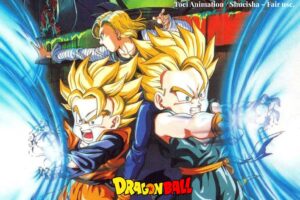
The demonstrated peak: Read the ledger and try not to wince. Goten became a Super Saiyan at seven — younger than anyone in history at the time, a record that redefined what the fandom thought was possible. He is half of Gotenks, one half of the fusion that carried the Buu Saga’s comedy and some of its real stakes. And he has Goku’s face — the story literally handed the next generation the protagonist’s features and the protagonist’s ceiling. As our ranking of the strongest Saiyans notes, hybrids with dormant arcs are the hardest fighters to place, and Goten is the purest case: all ceiling, no building.
What the story did instead: nothing that counts. Goten has no arc, no rival, no solo moment of consequence in decades of story. He exists as Trunks’s friend, as half of a fusion, as a kid in crowd shots who grew up between scenes. Even his aging-up in the Super Hero-era material arrives as a joke about fusion timing rather than as a story — the punchline being that the franchise can show you teenage Goten and still not give him anything to do.
The gap: here is the entry’s real point, and it is the strangest sentence on this list: Goten is not wasted potential so much as potential never even opened. Wasted implies something was spent. Nothing was spent. The box is still sealed, the receipt still in it, sitting on a shelf for twenty years while the franchise insists it values new generations. Every other character here got a peak and lost the aftermath. Goten got the peak and the story walked away before the aftermath could start.
1. Gohan — The Gap King
The demonstrated peak: No entry on this list — no entry possible on this list — touches this peak. Gohan is the only character in the franchise’s history ever positioned to replace Goku. The Cell Games were staged as a coronation: Goku, the protagonist, steps aside mid-tournament, hands the fight to his eleven-year-old son, and the story agrees with him. The narrative spent years stating that Gohan’s dormant potential exceeded his father’s — mentors said it, rivals felt it, the plot was built on it. And then he proved it: the first Super Saiyan 2 in history, dismantling Perfect Cell in the single most iconic transformation the series ever produced. For a full breakdown of what he can do, our ranking of every Gohan form, weakest to strongest, is the companion piece — the list of capabilities is long. This list is about what the story did with them.
What the story did instead: spent most of Super turning him into a cautionary tale about rust. The scholar in the suit and glasses who had to beg to train again; the humiliation in Resurrection ‘F’; the long stretches where the heir apparent was an afterthought in his own franchise. The waste was not a single decision but a slow leak across years — the coronation of the Cell Games left to deflate, one arc at a time, until “remember when Gohan was the future?” became a fandom in-joke.
The repair — credited honestly: Dragon Ball Super: Super Hero (2022) repaired him. Gohan Beast is real, it is spectacular, and it is presented at the absolute top tier of the franchise’s power scale. This entry will not pretend otherwise, because the gap method demands both sides of the ledger and the ledger has a new line. The waste is real, but it is the only one on this list with a live repair in progress.
Why he is still No. 1: because no other gap is this wide. Measure it: the only planned successor in franchise history, stated to exceed the protagonist, left idle for the better part of two decades — against a repair that, as of this writing, consists of one film and its aftermath. The subtraction still dwarfs everything below it. If the repair completes, this ranking will need a rewrite, and this publication will be delighted to write it. Until then: the gap king, by a distance.
The Full Ranking at a Glance
| Rank | Character | Demonstrated peak | What the story did instead |
|---|---|---|---|
| 8 | Chiaotzu | Psychic paralysis and telekinesis no other human fighter has; self-sacrifice vs. Nappa | Forty years as Tien’s background companion; powers never developed |
| 7 | Videl | Serious martial artist who learned flight in days; brave stand at the 25th Tournament | Written into early retirement; later material forgets she could fight |
| 6 | Yamcha | Goku’s first rival-companion; tournament regular | Saibaman death became a meme; Super rehabbed him as comedy, not as a fighter |
| 5 | Launch | Headline cast member of early Dragon Ball; the sneeze-transformation dual personality | Vanished because the author forgot her — not sidelined, misplaced |
| 4 | Tien Shinhan | 22nd Tournament champion who beat Goku; inventor of the Kikoho and Solar Flare | A dojo in Super and a Tournament of Power exit that satisfied nobody |
| 3 | Raditz | Goku’s brother; the Saiyan who opened Z | Dead in the opening episodes; never revived, mentioned, or mourned since |
| 2 | Goten | Super Saiyan at seven; half of Gotenks; Goku’s face on the next generation | No arc, no rival, no solo moment of consequence in decades |
| 1 | Gohan | Positioned to replace Goku; stated potential exceeding his father’s; first SSJ2 | Most of Super as a cautionary tale about rust — with a live repair (Beast) in progress |
The One Waste the Series Can Still Fix
Every entry above is an argument about the past. This one is an argument about the future — and the pick is Goten.
Start by eliminating the repaired: Gohan’s fix is underway. Beast exists, the story remembered its heir, and whatever comes next is continuation, not rescue. Cross him off — happily. Then eliminate the structurally closed: Launch’s window shut the day the author forgot her and the story moved on without her; reviving her now would be nostalgia, not repair. Raditz is dead in a franchise that only revives people it finds useful, and it has spent decades finding no use for him. Yamcha and Tien have had their trajectories set by the story’s own verdict — the narrative has told us, repeatedly, who they are now: the funny guy, the dojo master. Those are not insults anymore; they are settlements. Chiaotzu’s peak was too modest for a headline rescue. Videl’s path back would require the story to care about its human adults as fighters again, and nothing in Super suggests that appetite.
Goten is the only entry with no settlement, no verdict, no rust narrative, and no death to undo. His story never started, which means nothing needs retconning. The ceiling is documented — Super Saiyan at seven is a fact on the page, not a fan theory — and the Super Hero-era material has already aged him into a body that can carry a story. The pieces are on the board: a famous face, a blank arc, a generation of fans who grew up waiting. Give him a rival. Give him a solo fight with consequences. Give him one arc that is his, the way the Cell Games were Gohan’s, and the strangest entry on this list becomes its happiest correction.
The franchise keeps saying the next generation matters. Goten is the receipt for that claim, still unopened. Open it.
Frequently Asked Questions
What does “wasted potential” mean in this ranking?
It means the gap between demonstrated peak and story usage. Demonstrated peak is what a character provably did or what the story stated about them — a feat, a transformation, a title. Story usage is what the narrative gave them afterward — arcs, fights, roles. The ranking subtracts one from the other. It is not a power ranking and not a popularity contest; a beloved character with a modest peak cannot outrank a headliner the story abandoned.
Why is Gohan No. 1 if Dragon Ball Super: Super Hero repaired him?
Because the gap is still the widest in the franchise. Gohan was the only character ever positioned to replace Goku, with stated potential exceeding his father’s, and then spent most of Super as a cautionary tale about rust. The repair — Gohan Beast — is real and this ranking credits it honestly; it is the only waste on the list with a live fix in progress. But one film’s repair against nearly two decades of idle still leaves the largest subtraction on the board.
Why does Launch count if she was never that strong?
Because this list ranks the gap, not power level. Launch was a headline cast member of early Dragon Ball — part of the core ensemble at Kame House — and then vanished entirely, with series creator Akira Toriyama later acknowledging in interviews that he had simply forgotten about her. Nobody else on this list was wasted by pure accident. She is the most literal entry here: not sidelined, misplaced.
Was Yamcha always a joke character?
No — and that is the point of his entry. Yamcha began as Goku’s first real rival-companion, a desert bandit who pushed early Goku and a regular at the World Martial Arts Tournaments. The joke status came later: his death at the hands of a Saibaman in the Saiyan Saga became the internet’s shorthand for failure. Super‘s baseball episode (ANIME) rehabilitated him as a fan-favorite comedian, but as comedy — not as the fighter he started as.
Why is Chiaotzu ranked last?
Because the gap method cuts both ways. Chiaotzu’s waste is real — unique psychic powers, forty years of background duty — but his demonstrated peak was modest: he was never positioned as a headliner. A small peak minus near-zero usage is still a small gap. He anchors the list as its floor: this is what the minimum qualifying waste looks like, and his entry notes the sting — his toolkit is exactly what modern Dragon Ball builds support roles from, and he never got one.
Which character on this list is most likely to be fixed next?
Goten, and it is not close. Gohan’s repair is already in progress. Everyone else faces a closed door — death, retirement, authorial forgetfulness, or a settled new role. Goten alone has no verdict against him: no rust narrative, nothing to retcon, a documented ceiling (Super Saiyan at seven), and a newly adult body in the Super Hero-era material. His potential was never even opened, which makes it the easiest to open.