
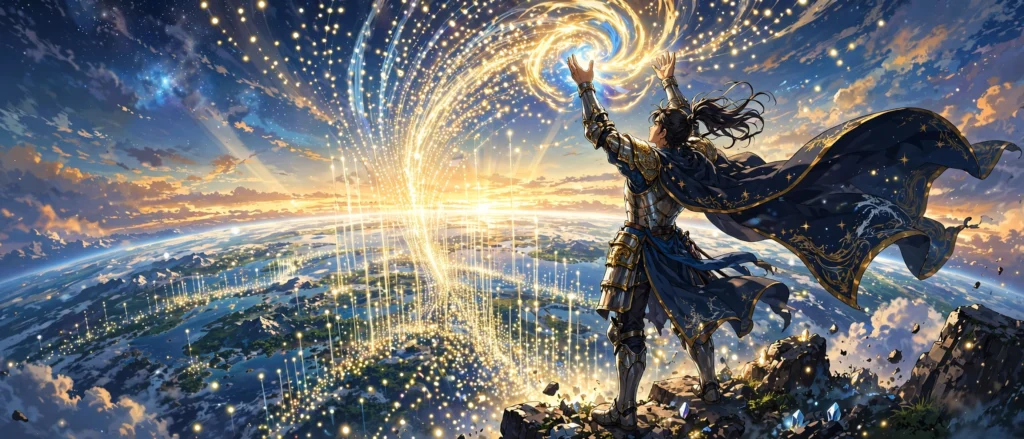
Dragon Ball endings have a harder job than its beginnings. A beginning only has to make a promise: a stronger enemy is coming, a new form is possible, a tournament will sort the strong from the loud. An ending has to keep forty years of promises at once. Every transformation has raised the bill, every revival has taught the audience that death can be negotiated, and every villain has arrived claiming that this time the old rules will not save anyone. That is why these dragon ball saga finales ranked by payoff, rather than by power level alone, separate so cleanly into the merely loud and the truly earned.
The finales that stay with people rarely end on the biggest blast. They end on a choice the blast cannot make by itself: mercy offered to an enemy who refuses it, a child trusted with a power his father could not finish using, a wish spent on strangers, or a whole planet lifting its hands because one famous fraud finally asked them to believe something real. A weak ending spends everything the saga built and leaves the board exactly as it found it. A great one changes who the characters are allowed to be next.
A quick note on scope before the countdown. In this article, “saga” groupings follow the anime’s common usage, so the two modern films count where their stories function as self-contained saga finales, and GT is included but always labelled clearly, because it sits outside Super’s continuity. Manga and anime finales also differ for Super arcs — the Tournament of Power, for example, ends differently in the manga in its details — so this ranking judges the anime versions, in general terms, and does not pretend the two tellings are identical.
How We Ranked Them
We kept the tests simple, and we applied them in the same order to every entry. When two endings were close, the one that changed a person beat the one that only raised a power reading.
Satisfaction asks whether the ending pays off the arc’s own buildup. If a saga spends dozens of episodes teaching us to fear a villain, hope for a form or wait for a character to stand up, the finale has to cash that specific cheque — not a different, larger cheque it printed in the final ten minutes.
Thematic fit asks what the ending says. Does the way the fight finishes express what the saga was actually about — inheritance, mercy, pride, survival, trust — or does it just stop the plot? The best Dragon Ball finales make their point with an action, not a speech.
Consequence asks what the ending left behind. A spared enemy, a dead hero, a restored universe, a departed legend and a child handed the future all count, but so does a quieter cost: a timeline that could not be saved, or a torch that was passed beautifully and then, in later stories, politely handed back. Consequence is where several famous endings lose points they thought they had banked.
9. Super Hero — The Inheritance That Stays Deliberately Small
The Super Hero film finale is the inheritance ending, and on its own terms it is lovely. The Red Ribbon machinery is finally brought down by Gohan and Piccolo — the student who was once a frightened child in a purple gi, and the mentor who raised him through danger after danger — with Gohan Beast and Orange Piccolo turning a family bond into the decisive power of the film. For viewers who waited years for either character to be centred again, the satisfaction is real and warm.
It ranks last here for an honest reason the film itself seems to accept: the stakes are low, by design. Cell Max borrows the shape of an older catastrophe more than he earns a new one, the threat is largely local, and the wider universe is much the same on the last morning as it was on the first. Its consequence is personal — Gohan is back in the fight, Piccolo is stronger, and a neglected corner of the cast matters again. That is a good homecoming. It is not, by the three tests, an era-defining finale.
8. Broly — The Mercy Ending That Refuses the Old Script
Dragon Ball Super: Broly builds toward the most familiar finish imaginable — a fused warrior, Gogeta, overwhelming a raging Saiyan — and then refuses to land the killing blow. A wish interrupts the final blast and carries Broly out of danger, saving the supposed monster from the heroes as much as from himself. The film then does something even braver with its last movement: it gets quiet. Goku visits Broly as a friend, bringing supplies, food and a house, and treats a lifetime of being hunted and used as something to answer with shelter.
Broly is not beaten into a crater; he is handed the beginnings of a home. The thematic fit is excellent, because the film was always about what other people made of Broly’s power, and the ending is the first choice made for his safety rather than his usefulness. It sits at eight only because a single film carries less accumulated promise than the long television arcs, and because its consequence, while profound for Broly, Cheelai and Lemo, leaves the wider world untouched. Gentleness earned it this place. Scale is what keeps it from climbing.
7. Saiyan Saga — The Win Nobody Could Manage Alone
The Saiyan saga finale is a victory assembled from leftovers, and that is exactly its charm. Goku is too beaten to finish the fight himself and has to coach from the ground. Krillin is trusted with the Spirit Bomb Goku gathered. Gohan has to be in the right place when that energy comes back into play, his Great Ape form becomes a desperate final problem and a weapon at once, and even Yajirobe’s sword matters at the moment nobody expected. No single hero owns this ending, which is why it taught the series how ensemble finishes could work — a lesson we explored from another angle in our ranking of Dragon Ball’s greatest team-ups, ranked.
Then comes the decision that shapes everything after it: Vegeta leaves alive, because Goku asks for mercy for an enemy who has helped kill his friends. The consequence is enormous — the spared prince becomes the series’ second axis, its rival, anti-hero and eventually one of its fathers and defenders. On consequence alone, this finale could argue for the top three. It ranks seventh because satisfaction and thematic fit were still forming here: the win is gloriously scrappy rather than clean, and the saga’s ideas about mercy and pride only become fully legible in hindsight, once we know what Vegeta will become.
6. Future Trunks Saga — The Ending Where the Heroes Lose
This is the darkest ending in the franchise, and we are going to argue about it openly rather than hide the disagreement inside the ranking. The heroes lose. Not narrowly, not with a consolation wish waiting off-screen, but completely: the corrupted timeline cannot be repaired, Zeno erases it entirely, and Trunks and Mai leave for a different timeline where versions of themselves already exist. The home Trunks spent his whole life trying to save is not restored. It is removed.
Ranked on honesty, this finale could sit several places higher. An arc about a god’s corruption — a divine being so certain of his own purity that he became a monster — ends with godhood itself as the only exit left, and that is a bleakly perfect thematic fit. Ranked on satisfaction, it deliberately gives the audience almost nothing to hold. That tension is why it lands in the middle. Its consequence is total, its courage is real, and its cost is the years of struggle it cannot give back. A finale can be admirable and still be one many fans never want to live through again.
5. GT’s Shadow Dragon Saga — A Farewell, Judged on the Ending Alone
To be clear about the label: this is GT, outside Super’s continuity, and we are ranking the ending alone, not the reputation of the series that led to it. On that basis, the Shadow Dragon finale is the most poetic close Dragon Ball has produced. The threat grows out of the Dragon Balls themselves — out of decades of wishes and reliance — and the answer is a Spirit Bomb gathered on a universal scale, followed by the image that defines the whole ending: Goku leaving with Shenron, the hero and the wish-granting dragons departing together.
The thematic fit is sharper than GT is usually given credit for. A saga warning against leaning on the Dragon Balls ends by taking the Dragon Balls away, and a hero who spent a lifetime being brought back finally walks into legend instead. The satisfaction is elegiac rather than triumphant, and part of its force comes from saying goodbye to the franchise itself, not just to this one enemy — which, honestly judged, is also why it stops at five. It borrows the shape of another finale higher on this list, and its emotional peak depends on a farewell bigger than its own buildup. As an ending, though, almost nothing in Dragon Ball is braver about letting go.
4. Frieza Saga — Mercy Refused on a Dying Planet
The Frieza saga finale turns on mercy, twice offered and twice instructive. Goku, having become the Super Saiyan of legend, still tries to end the duel without killing a beaten Frieza — sparing him, then giving him energy to escape — and only delivers the final blast when Frieza uses that mercy to attack again. The point is precise: Goku does not become a legend by becoming like his enemy. He becomes one by remaining himself at the exact moment rage would have excused anything. Namek then explodes behind him, closing the most mythic duel in the series in fire rather than celebration.
What lifts this ending is what happens after the planet is gone. The saga closes at home, with wishes, returns and a painful wait for news of the one person who has not come back — quiet, patient storytelling that trusts absence to do the emotional work. The consequence is foundational: the Super Saiyan legend is complete, the cast’s world has widened permanently beyond Earth, and every later saga measures itself against this one. It misses the top three only because its resolution is split between an explosion and an epilogue, while the three finales above it fuse climax and meaning into a single, unforgettable image.
3. Tournament of Power — The Wish That Brought Back the Erased
A tournament built on erasure ends, astonishingly, not with a kill but with a restoration. After a final stand in which Goku, Frieza and Android 17 — three fighters nobody would have trusted together at the start — combine to clear the way, it is 17 who earns the wish, and he uses it to bring back the erased universes. We have ranked the event itself in our guide to every Dragon Ball tournament, ranked, but the finale deserves separate praise: a contest designed to teach mortals their place instead proves, to the gods watching, that the universes were worth keeping.
The thematic fit is quietly radical. This is one of the most self-interested casts ever assembled — fighters entering for wishes, pride, survival or a cruise ship daydream — and its last act is unselfish on a multiversal scale. The consequence matches the scale, with two price tags attached: the erased universes return, resetting the multiverse, and Frieza is resurrected as payment for his help, restoring a danger the heroes had finally been free of. It ranks third rather than higher because a restoration, however moving, softens permanence by design. The two finales above it make choices that cannot be wished back as cleanly. A note for manga readers: the manga closes this arc differently in its details, and this ranking judges the anime ending described here.
2. Cell Games — The Torch Passed in a Beam Struggle
Let us state this one precisely, because the details are the argument. Cell is not simply outpowered in a fair exchange. He is beaten by Gohan’s unleashed power in the father-son Kamehameha, with Goku’s spirit guiding his son through the struggle, and with the rest of the team throwing themselves at Cell in the final moments — Vegeta’s blast, above all, breaking Cell’s focus and opening the instant Gohan needs. A beam struggle is won by trust: a dead father’s faith, a frightened boy finally believing his own strength, and former enemies spending themselves to give him one clear second. Few endings in the series are this satisfying, and the losses behind it are ones we have counted among every Dragon Ball death that actually mattered, ranked.
The thematic fit is just as strong. Cell is a being assembled from the heroes — engineered from their cells, their techniques and their violence — and he is destroyed by the one fighter who never wanted to be a weapon at all. This was the passing-of-the-torch ending: Goku gone, Gohan ready, the future visibly changing hands. Later stories famously declined to keep that arrangement, returning the centre to Goku, and that reversal is the one honest mark against this finale’s consequence. Judged in its own moment, it is nearly flawless. Judged by what it left behind, the torch was lit beautifully and then carried back. That is the whole distance between second and first.
1. Buu Saga — The Ending the Whole Planet Had to Win
Every test we set at the start points to the same winner. Kid Buu is destruction without an argument to answer — no pride to appeal to, no mercy to negotiate with, no hidden wound to heal — so the saga cannot end with a stronger punch alone. It ends with a Spirit Bomb built from the whole Earth’s raised hands: the only finale where the people Goku spent the series protecting do the saving themselves. The crowd is not background decoration in that ending; the crowd is the ammunition. And the voice that finally convinces them belongs to Mr. Satan, the fraud, the comic coward, the one person Earth already knows and trusts. A fraud becomes a hero by doing one true thing where everyone can hear him.
Around that central image, the saga’s themes land all at once. Goodness turns up in the unlikeliest people, exactly as this long, strange saga kept insisting it would. Vegeta’s arc completes in the same stretch of story — the prince who once demanded the planet kneel now fights to buy it time, helps design its rescue and accepts a plan in which someone else gets the glory. The consequence is a world that has genuinely changed its cast: Buu’s evil is gone, a kinder Buu remains part of life on Earth, the path toward Uub is opened, and Earth’s people are no longer just the stakes of the fight. They are its authors. Cell ends a bloodline beautifully. Buu ends a worldview completely. That is why it stands first.
The full ranking, at a glance:
| Rank | Saga | How it ends | What it left behind |
|---|---|---|---|
| 9 | Super Hero | Gohan Beast and Orange Piccolo bring down the Red Ribbon machinery and Cell Max | Gohan and Piccolo re-centred, with deliberately low wider stakes |
| 8 | Broly | A wish saves Broly from Gogeta’s finishing blast, and Goku later visits him as a friend | Broly gains a home, food and friends instead of a grave |
| 7 | Saiyan Saga | A combined effort — Spirit Bomb, Great Ape Gohan and Yajirobe’s sword — defeats Vegeta | Vegeta is spared and leaves Earth alive, shaping everything after |
| 6 | Future Trunks Saga | Zeno erases the corrupted timeline itself | Trunks and Mai are displaced to a timeline where their doubles exist |
| 5 | GT’s Shadow Dragon Saga | A universal Spirit Bomb wins, and Goku leaves with Shenron | The Dragon Balls and Goku depart together |
| 4 | Frieza Saga | Goku defeats Frieza after his mercy is refused, and Namek explodes | The Super Saiyan legend is complete and the story’s world widens for good |
| 3 | Tournament of Power | Android 17 wishes the erased universes back | The multiverse is restored, and Frieza is resurrected as the price |
| 2 | Cell Games | The father-son Kamehameha destroys Cell after Vegeta’s blast opens the moment | Goku is dead and Gohan is Earth’s protector — a torch later stories handed back |
| 1 | Buu Saga | A Spirit Bomb built from Earth’s raised hands destroys Kid Buu | Vegeta is redeemed, Earth saves itself, and the path to Uub opens |
The Ending Super Still Has to Beat
Our verdict is the Buu saga finale, and it is not especially close. Future Dragon Ball endings will almost certainly be larger. They will involve higher gods, older histories and forms that make today’s transformations look modest. None of that, on its own, beats Buu, because Buu’s final attack could only have been built by the whole series that came before it: a hero defined by protecting ordinary people, a rival redeemed enough to ask them for help, and a celebrity fraud trusted enough to be believed. The power in that Spirit Bomb is not the point. The hands are the point.
So the bar for Super, whenever its final saga truly arrives, is specific. Do not just give Goku a stronger opponent and a louder finish. Give the universe a part to play in its own rescue, complete the rival rather than resetting him, and let an unlikely voice say the thing the heroes cannot. An ending that does all three will deserve the argument. An ending that only tops the power scale will rank somewhere below a planet full of raised hands — and it will know why.
Frequently Asked Questions
What is the best Dragon Ball saga finale?
The Buu saga finale. It is the only ending that passes all three of our tests at the highest level: the Spirit Bomb pays off the whole series, the theme of goodness in unlikely people lands through Mr. Satan and Vegeta, and Earth itself becomes a participant rather than a prize.
Why is the Cell Games finale not number one?
It nearly is. The father-son Kamehameha is arguably the most satisfying single moment on this list, and its passing of the torch was perfect in its moment. It loses first place on consequence: later stories handed the centre back to Goku, softening the inheritance the ending worked so hard to establish.
Is GT’s Shadow Dragon finale really one of the best?
Judged on the ending alone, yes. GT sits outside Super’s continuity and the series as a whole is debated, but its farewell — a universal Spirit Bomb, the Dragon Balls departing and Goku leaving with Shenron — is the most poetic close in the franchise, and it earns fifth place here on that basis.
Why does the Future Trunks saga rank in the middle if the heroes lose?
Because its bleakness is both its strength and its limit. Zeno erasing the timeline is an honest ending for an arc about a god’s corruption, and its consequence is total. But satisfaction is deliberately denied — Trunks’s world is not saved — so it cannot outrank finales that are both devastating and fulfilling.
Are these the manga endings or the anime endings?
The anime endings. Saga groupings here follow the anime’s common usage, and Super’s arcs close differently in the manga in their details — the Tournament of Power is the clearest example — so this ranking judges the anime versions and does not treat the two tellings as interchangeable.
Which finale had the biggest consequences?
By raw scale, the Tournament of Power: erased universes were restored and Frieza was resurrected. But consequence is only one of our three tests, which is why it ranks third overall. The Buu finale changed fewer worlds and more people — and people are what this series is ultimately about.

Pingback: Dragon Ball's Funniest Fighters, Ranked